


Author: Hi, I'm Shivam Gupta, an experienced authority in HR technology and recruitment optimization with over a decade of experience transforming talent acquisition processes across the global market. Also, we are running another software development brand, Pitch N Hire
In today's hyper-connected digital ecosystem, software testing services have become the backbone of every successful business operation—from e-commerce platforms handling millions of transactions to healthcare systems managing patient data and financial institutions processing real-time transfers. The complexity of modern applications, combined with escalating user expectations and increasingly stringent regulatory requirements, makes quality assurance software testing services more critical than ever before.
QA software testing services are no longer a luxury or an afterthought in the development process; they are a strategic imperative that directly impacts customer satisfaction, brand reputation, and business profitability. When applications fail or perform inadequately, the consequences ripple far beyond technical teams—they translate into lost revenue, diminished user trust, and potential regulatory penalties. This is precisely why organizations across the globe are investing heavily in comprehensive quality assurance and testing services to ensure their digital products deliver exceptional experiences.
The evolving nature of software development—with shorter release cycles, distributed teams, cloud-native architectures, and complex integrations—demands testing services in software testing that are not only thorough but also agile and intelligent. Modern software testing and quality assurance services have transformed from manual, time-intensive processes into sophisticated, AI-driven ecosystems that can validate applications at unprecedented speeds without compromising quality.
The software testing services landscape is undergoing a profound transformation, driven by technological innovation, changing business models, and the urgent need to balance speed with quality. Several critical trends are reshaping how organizations approach quality assurance testing services:
AI-First Quality Assurance is emerging as the dominant paradigm, where artificial intelligence and machine learning serve as co-pilots in the testing process. Rather than replacing human testers, AI augments their capabilities through automated software testing services by automating routine tasks, identifying high-risk areas, generating intelligent test cases, and predicting potential defects before they reach production. This shift enables QA teams to focus on exploratory testing, strategic quality decisions, and scenarios that require human creativity and judgment.
Agentic AI and Autonomous Testing represent the next evolutionary step in automated testing services, where intelligent agents independently manage aspects of the test lifecycle—from scheduling test cycles and allocating environments to analyzing results and logging defects. These autonomous agents learn from each test execution, continuously refining their strategies and adapting to application changes without human intervention. By 2026, autonomous agents are expected to handle a significant portion of routine QA testing services workloads, fundamentally changing how organizations scale their testing efforts.
Testing services in software testing have become complementary rather than competing strategies. Shift-left testing embeds quality checks early in the development process through agile software testing services, enabling teams to catch defects when they're cheaper and faster to fix. Simultaneously, shift-right testing validates applications in production-like environments and monitors real-world performance, capturing issues that static testing environments might miss. The most successful organizations blend both approaches to create a continuous quality assurance testing service throughout the entire software lifecycle.
Cloud-Native and Microservices Testing has become essential as organizations migrate to distributed architectures. Traditional testing methodologies struggle with the complexity of microservices, containerization, and serverless architectures. Modern software test services now specialize in contract testing, service virtualization, and chaos engineering to ensure that individual services and their interactions remain reliable under real-world conditions.
Security and Compliance-Driven Testing has moved from a specialized function to an integral part of routine quality assurance. With regulatory frameworks like GDPR, HIPAA, and evolving AI governance requirements, security testing services now incorporate security scanning, vulnerability assessment, and compliance validation into their standard offerings. Organizations must ensure that applications meet not only functional requirements but also stringent security and regulatory standards through comprehensive testing services in software testing.

Real User Monitoring and Observability have transformed how quality is measured. Rather than relying solely on synthetic tests, modern QA services leverage real user signals, production monitoring, and advanced observability tools to understand actual application behavior. This data-driven approach enables organizations to prioritize testing efforts based on genuine user impacts rather than assumed scenarios.
These trends collectively indicate that testing services in software testing in 2026 are becoming more intelligent, proactive, and integrated into the entire software development ecosystem—a fundamental shift that organizations must embrace to remain competitive in an increasingly demanding digital landscape.

The global software testing services company market is dominated by organizations that have invested heavily in technological innovation, built world-class expertise across multiple industries, and developed sophisticated service delivery models spanning onshore, nearshore, and offshore locations. These leading qa software testing services providers combine decades of accumulated experience with cutting-edge tools and AI-driven methodologies to deliver software quality assurance testing services that drive significant business value for their clients.
The most respected software testing services company providers share common characteristics: they employ certified QA professionals with deep expertise across multiple domains, maintain centers of excellence that continuously innovate and improve testing approaches, invest in proprietary tools and accelerators that speed up testing cycles, and operate with a client-first philosophy that prioritizes understanding unique business requirements over standardized solutions.

Expert Rating: 4.9/5.0 (Clutch - 165+ verified reviews, GoodFirms)
Core Features:
Pros:
Cons:
Pricing Model:
AppSierra's flexible engagement for affordable QA testing services for startups starts from $3,200/month for time-and-materials projects, with fixed-bid pricing available for well-defined scopes. Enterprise clients typically see 40-60% cost reduction through automated test case generation and predictive defect detection compared to traditional outsourced software testing services.
Case Study: EdTech Platform Acceleration
Challenge: A fast-growing EdTech platform needed to accelerate from 2-week to weekly releases while maintaining quality standards across multiple LMS modules.
Solution Implemented:
Results Achieved:

Expert Rating: 4.9/5.0 (Clutch, Gartner recognized)
Core Features:
Pros:
Cons:
Pricing Model:
Qualitest's enterprise pricing is custom-tiered based on team size, testing scope, and engagement duration. Most clients report $20,000-$80,000+ monthly for managed continuous software testing and quality assurance services with dedicated QA teams. Time-and-materials model available for pilot projects.
Case Study: Financial Services Compliance Testing
Challenge: A leading fintech player required rigorous compliance testing across 50+ payment flows to meet PCI DSS, GDPR, and regional regulatory requirements.
Solution Implemented:
Results Achieved:

Expert Rating: 4.8/5.0 (Clutch, Industry recognition)
Core Features:
Pros:
Cons:
Pricing Model:
BugRaptors operates on flexible models: $4,000-$12,000/month for dedicated augmented testing teams or $50-80/hour for staff augmentation. AI-augmented automated software testing services reduce costs by automating repetitive tasks while maintaining quality through human validation.
Case Study: Mental Health Mobile App Security
Challenge: A mental health startup needed comprehensive testing services in software testing and security validation for HIPAA compliance before Series A funding.
Solution Implemented:
Results Achieved:

Expert Rating: 4.7/5.0 (Clutch, TrustRadius)
Core Features:
Pros:
Cons:
Pricing Model:
Testlio's flexible pricing ranges from $25-$50/hour for dedicated qa services teams or $2,500+ per campaign for crowdtesting engagement. Enterprise clients with continuous software testing services need to report $15,000-$40,000/month, depending on scope.
Case Study: FinTech App Global Launch
Challenge: A digital payment startup required comprehensive mobile software testing services across 50+ countries, 30+ languages, and 100+ payment methods before global launch.
Solution Implemented:
Results Achieved:
Comprehensive software testing services encompass multiple interconnected disciplines, each focused on validating different aspects of application quality. Understanding these components is essential for organizations seeking to develop effective testing services in software testing strategies that address all dimensions of software reliability.
Functional Testing Services represent the foundation of most quality assurance testing services programs, focused on validating that applications behave as specified and meet documented requirements. This encompasses unit testing (validating individual code components), integration testing (confirming that system components work together correctly), system testing (validating end-to-end application behavior), and user acceptance testing services (ensuring applications meet business requirements).
Non-Functional Testing validates aspects of application quality beyond functional correctness, including performance characteristics, security posture, usability, accessibility, and reliability under stress. Performance testing services ensure applications meet response time requirements and maintain stability under varying load conditions. Security testing services actively explore application vulnerabilities to identify and remediate weaknesses before applications reach production environments.
Regression Testing Services have become increasingly critical as development cycles shorten and release frequencies increase. This discipline ensures that changes and enhancements do not inadvertently break existing functionality—a challenge that has grown exponentially as application complexity increases and development velocity accelerates through agile software testing services.
Test Automation Services involve creating executable test programs that validate applications without human intervention, enabling organizations to execute extensive test suites repeatedly at minimal cost. Modern automated software testing services emphasize maintainability, reusability, and intelligent test prioritization rather than simply automating every possible scenario.
Test Data Management focuses on creating, managing, and refreshing data sets used in testing environments. This critical function has become increasingly complex as organizations face privacy regulations, data volume challenges, and requirements to test against data characteristics representative of production environments.
Performance and Load Testing Services validate application behavior under varying levels of user load and stress conditions, ensuring that systems maintain acceptable performance and reliability even when experiencing peak demand or unusual conditions—essential for testing services in software testing.
Security Testing and Penetration Testing Services actively probe applications for security weaknesses, including authentication vulnerabilities, authorization bypasses, injection attacks, and other security flaws that could compromise data confidentiality, integrity, or system availability.
Quality assurance software testing services create multiple interconnected mechanisms through which they improve application reliability, security, and performance—benefits that extend far beyond the immediate discovery and remediation of defects.
Improved Reliability emerges from rigorous validation across diverse scenarios, configurations, and conditions that replicate how applications will actually be used in production. By testing applications against edge cases, failure scenarios, and stress conditions before release through comprehensive software quality services, QA significantly reduces the likelihood that unexpected situations will cause application failures. Additionally, comprehensive end-to-end testing services identify cascading failure scenarios where failure in one component triggers failures in dependent systems, enabling architecture and design improvements that enhance overall system resilience.
Enhanced Security Posture results from security testing and penetration testing services that actively explore application vulnerabilities before malicious actors discover them. By identifying weaknesses in authentication mechanisms, authorization logic, data encryption, and input validation—among many other security-relevant aspects—qa software testing services enable organizations to remediate vulnerabilities during development rather than in reactive responses to security incidents. Security testing also validates that organizations have effectively implemented security controls and comply with regulatory requirements for data protection, privacy, and system security.
Optimized Performance emerges from testing services in software testing and applications that identify bottlenecks, resource constraints, and scalability limitations before applications reach production environments. By understanding how applications behave under varying load conditions through load testing services, organizations can optimize database queries, improve algorithm efficiency, scale infrastructure appropriately, and implement caching strategies that ensure applications deliver acceptable performance even during periods of peak demand.
Reduced Operational Costs result from the combination of these improvements. More reliable applications require fewer costly emergency fixes and experience less unplanned downtime. Applications with stronger security postures experience fewer security breaches and compliance violations. Applications with better performance require less infrastructure investment and deliver superior user experiences that reduce support costs. These cumulative benefits translate into substantial financial value that often exceeds the cost of comprehensive software quality assurance testing services by multiples.

The automation of software testing services has evolved dramatically over the past decade, from simple script-based automation to intelligent, AI-powered systems that can adapt to application changes, generate test cases autonomously, and learn from each test execution. This evolution represents one of the most significant transformations in how organizations approach quality assurance testing services.
AI-powered automated testing services address fundamental challenges that have plagued traditional automation approaches for years. Traditional test automation services required teams of specialized professionals to write and maintain test scripts—a labor-intensive process that often consumed as much effort as the testing itself. As applications evolved and user interfaces changed, automated scripts frequently broke, requiring teams to spend substantial time fixing tests rather than creating new ones. This "test maintenance burden" often made automation projects unsustainable and failed to deliver the promised return on investment.
AI-powered automated software testing services transform this dynamic by enabling systems that can automatically generate test cases by analyzing application interfaces and behavior patterns, adapt to application changes without requiring script rewrites, identify and prioritize the most critical test scenarios based on actual usage patterns and historical defect data, and continuously learn and improve their testing strategies with each execution. These capabilities fundamentally address the scalability and sustainability challenges that limited the adoption of traditional test automation services.
The most advanced AI-powered software testing and quality assurance services employ multiple AI techniques working in concert. Computer vision capabilities allow these systems to "see" application interfaces, similar to how human testers perceive them, enabling them to identify visual regressions and usability issues that script-based testing might miss. Natural language processing enables keyword-driven testing services where test automation systems understand application context and user intent, allowing them to generate test scenarios based on natural language descriptions rather than requiring detailed technical specifications. Machine learning algorithms enable continuous improvement, as systems analyze test execution data to identify patterns, predict potential failure points, and optimize their testing strategies over time.
The acceleration of software release cycles represents one of the most significant competitive advantages that organizations can achieve in today's fast-moving digital landscape. Organizations that can release software frequently, reliably, and with confidence can respond more quickly to market opportunities, incorporate customer feedback faster, and maintain a competitive advantage. AI-powered automated testing services are one of the critical enablers of these accelerated release cycles.
Dramatically Reduced Testing Time emerges from automation's ability to execute extensive regression testing service suites in a fraction of the time required for manual software testing services. Where manual testing might require days or weeks to validate a software release, automated software testing services can execute the same comprehensive test suite in hours or even minutes. This dramatic acceleration in testing speed eliminates testing as a bottleneck in the release process, enabling organizations to move code from development through testing to production more quickly.
Continuous Feedback Loops become possible with automated testing services, where testing runs continuously in response to code commits, merges, and builds. Rather than waiting until dedicated testing phases to discover defects, developers receive immediate feedback about code quality through agile software testing services, allowing them to fix problems while changes are still fresh in their minds. This continuous feedback dramatically improves development efficiency and reduces the likelihood that small defects compound into larger, more expensive-to-fix problems.
Higher Test Coverage is often achieved through test automation services, as organizations can create and maintain far more test cases than would be practical with manual testing services. AI-powered systems can generate test scenarios that would be too tedious or time-consuming to create manually, enabling organizations to validate applications far more comprehensively. This expanded coverage translates into higher confidence in software quality and reduced risk of defects reaching production environments.
Consistent, Repeatable Testing eliminates the variability that characterizes manual software testing service approaches. Manual testers, regardless of their expertise, may follow slightly different paths through applications, miss edge cases, or test inconsistently from day to day. Automated testing services execute tests with absolute consistency, ensuring that the same scenarios are validated the same way every time, producing reliable, reproducible results that provide genuine confidence in application quality.
Risk-Based Testing Prioritization allows software quality services automation systems to focus limited testing resources on the areas where defects would have the greatest impact. Rather than testing everything equally, intelligent automated software testing services can identify high-risk components, areas with histories of defects, and critical user flows, ensuring that testing effort is concentrated where it matters most. This intelligent prioritization maximizes the quality value delivered from every hour of testing effort.
The ecosystem of test automation services tools has evolved dramatically, with modern tools increasingly incorporating artificial intelligence, cloud-based testing capabilities, and integration with development and deployment pipelines. The most successful organizations combine multiple tools, each optimized for specific testing scenarios, rather than attempting to use a single tool for all software testing services' needs.
AI-Powered Testing Platforms like Testim, Mabl, and Functionize represent the cutting edge of test automation services technology, offering self-healing tests that automatically adapt to application changes, AI-assisted test case generation that creates tests from natural language descriptions, and intelligent test prioritization that focuses testing effort where it matters most. These platforms represent a fundamental break from traditional automated testing services, offering capabilities that genuinely transform the economics of testing.
API Testing Services tools like Postman and REST Assured have become essential in modern development environments, particularly as organizations increasingly adopt microservices architectures where API testing services become a critical validation step. These tools enable teams to comprehensively test application programming interfaces, ensuring that services work together correctly and handle error scenarios appropriately—crucial for performance testing services for APIs.
Cloud-Based Testing Platforms like BrowserStack, Sauce Labs, and LambdaTest provide access to extensive device and browser combinations, enabling organizations to validate applications across the diverse hardware, operating system, and browser combinations that actual users employ through cross-browser testing services. These platforms have democratized cross-browser testing services for e-commerce and other applications, making it accessible to organizations of all sizes without requiring investment in extensive device labs.
Open-Source Testing Frameworks like Cypress, Selenium, Appium, and Jest continue to evolve and improve, providing cost-effective test automation services capabilities that organizations can customize to match their specific needs. The maturity and sophistication of these test framework services have increased dramatically, with enhanced capabilities for cross-browser testing, API testing services, mobile app testing services validation, and integration with modern development practices.
Unified QA Platforms that combine functional testing services, performance testing services, security testing services, and test management within integrated ecosystems are increasingly popular, as organizations recognize the value of having these traditionally separate software test services function work together within a cohesive system. These unified platforms reduce tool switching overhead, improve data consistency across testing disciplines, and facilitate collaboration between different testing specialties.
Test Management and Orchestration Tools like JIRA, TestRail, and Qase have evolved to support not just test case management but comprehensive test strategy orchestration, reporting, and integration with development and deployment processes. These tools provide visibility into testing progress, quality metrics, and test execution results that enable teams to make data-driven decisions about release readiness.

The proliferation of mobile devices, combined with the incredible diversity of hardware specifications, operating system versions, screen sizes, and network conditions, has created testing challenges of unprecedented complexity for mobile software testing services. Unlike web applications that operate in relatively controlled browser environments, mobile applications must function correctly across thousands of device configurations, each with unique capabilities, limitations, and characteristics.
Mobile users have fundamentally different expectations and behaviors compared to desktop users. They expect applications to function seamlessly whether they're connected to fast WiFi, traveling on slow 4G networks, or transitioning between different connectivity states. They expect applications to work correctly even when device resources are constrained—memory, battery, and processor capability. They expect applications to respect their device settings, accessibility requirements, and privacy preferences. Mobile software testing services must validate all these dimensions of user experience, ensuring that applications deliver the reliability and performance that users expect.
The business impact of mobile application failures is profound. Mobile applications often serve as the primary interface between organizations and their customers—whether for e-commerce, banking, social media, or countless other services. Application crashes, poor performance, or security vulnerabilities on mobile devices directly damage brand reputation and often result in negative app store reviews that severely impact subsequent user acquisition. This makes mobile app testing services critical for business success.
Effective mobile software testing services combine multiple complementary testing approaches, each focused on validating different aspects of mobile application quality:
Functional Testing Services validate that mobile applications behave correctly across the diverse device configurations and operating system versions that users employ. This includes testing core application functionality, navigation flows, data handling, and integration with device features like cameras, GPS, contacts, and push notifications through manual testing services for mobile apps. Mobile functional testing services must account for device-specific capabilities and limitations, ensuring that applications degrade gracefully on devices with limited resources or missing capabilities.
Usability Testing evaluates whether mobile applications deliver intuitive, accessible user experiences that match user expectations and conform to platform-specific design conventions. Mobile users have developed mental models about how applications should behave based on their experience with the operating system and other applications, and deviations from these expectations create friction that drives users away. User acceptance testing services ensure that applications feel natural and familiar to mobile users, follow established design patterns, and accommodate accessibility requirements that enable users with disabilities to effectively use applications.
Performance Testing Services validate that mobile applications respond quickly, consume reasonable amounts of device resources, and maintain stability even under challenging conditions like limited battery, restricted memory, or poor network connectivity. Mobile users often operate in environments far more resource-constrained than desktop environments, and applications that consume excessive battery or memory or respond sluggishly create negative user experiences that directly impact app store ratings and user retention.
Cross-Device and Cross-OS Testing validates application behavior across the wide spectrum of devices and operating system versions that actual users employ through cross-browser testing services adapted for mobile. Given the thousands of possible device configurations, comprehensive testing across all combinations is impractical, requiring intelligent prioritization and selection of representative device configurations for testing. Effective mobile software testing services strategies use data about actual user device distributions to focus testing effort on the devices and configurations that represent the largest user populations.
Real-Device Testing employs actual mobile devices rather than emulators or simulators, ensuring that mobile app testing services capture device-specific behaviors, performance characteristics, and environmental factors that emulators cannot fully replicate. While emulators have improved significantly, nothing fully captures the behavior of actual devices, including hardware-specific behaviors, realistic network conditions, and interactions with device sensors.
The mobile software testing services ecosystem has evolved to include sophisticated tools that address the unique challenges of mobile application validation:
AI-Powered Mobile Testing Platforms increasingly incorporate artificial intelligence to generate test cases by analyzing mobile application interfaces and user behavior patterns, automatically detect UI changes and adapt tests accordingly through self-healing automated testing services, intelligently prioritize testing across device configurations, and identify device-specific performance and usability issues that require targeted investigation.
Real Device Cloud Platforms like BrowserStack and Kobiton provide access to thousands of real mobile devices hosted in cloud environments, eliminating the need for organizations to maintain extensive physical device labs while providing access to device configurations that organizations could never maintain locally. These platforms enable rapid, parallel testing across numerous device and OS combinations, dramatically reducing the time required for comprehensive cross-browser testing services adapted for mobile devices.
Advanced Mobile Automation Frameworks like Appium 3.x, Detox (specialized for React Native applications), and platform-specific tools like Espresso (for Android) and XCTest (for iOS) provide sophisticated capabilities for automating mobile app testing services. These test framework services have evolved to incorporate self-healing capabilities, intelligent element identification, and integration with continuous integration and continuous deployment pipelines.
Performance Monitoring and Profiling Tools enable organizations to capture detailed performance data about mobile application behavior, including CPU usage, memory consumption, battery drain, network efficiency, and user experience metrics through performance testing services. Tools that simulate challenging network conditions and resource constraints enable teams to understand how applications behave under real-world conditions and optimize accordingly.
Visual Testing and Screenshot Comparison Tools address mobile-specific challenges around visual regression testing, accounting for the different screen sizes, resolutions, and orientations across which applications are displayed. These tools enable organizations to detect visual regressions and inconsistencies across diverse device configurations through automated testing services.
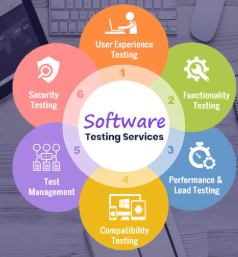
Enterprise applications represent the most complex software systems, often comprising millions of lines of code, integrating with dozens of backend systems, supporting thousands of concurrent users, and processing business-critical data that directly impacts organizational operations. Quality assurance and testing services for enterprise applications must address this extraordinary complexity while ensuring that applications remain reliable, performant, and secure under real-world operational stress.
Quality assurance software testing services for enterprise applications go beyond validating that applications work correctly; they must ensure that applications continue working correctly even as they scale to handle massive user populations, process enormous data volumes, and integrate with diverse legacy and modern systems. Enterprise qa testing services must account for business continuity requirements, regulatory compliance obligations, multi-geography deployment considerations, and the organizational challenges of coordinating testing across geographically distributed teams.
The financial impact of enterprise application failures is substantial. A few hours of downtime in a critical enterprise application can impact thousands of users and business operations, resulting in lost productivity, damaged customer relationships, and direct financial losses. This reality drives enterprise organizations to invest heavily in comprehensive quality assurance and testing services that significantly reduce the likelihood of production failures through end-to-end testing services for enterprise applications.
Performance and Load Testing Services for enterprise applications must validate that applications meet strict performance requirements under realistic production loads. Enterprise applications must often support thousands of concurrent users, process millions of transactions daily, and maintain acceptable response times even during peak usage periods through load testing services for high-traffic applications. Performance testing services involve simulating realistic user loads, executing extended test scenarios that expose memory leaks and resource exhaustion issues, and identifying bottlenecks that could limit scalability. Advanced performance testing services go beyond simple load testing to include stress testing (pushing systems beyond normal capacity to identify breaking points), endurance testing (validating that performance remains acceptable over extended periods), and spike testing (validating that systems handle sudden, dramatic increases in load gracefully).
Scalability Validation ensures that enterprises can grow their applications to support increased user populations, data volumes, and business complexity without requiring complete rewrites or major architectural changes. This includes testing whether databases can scale to handle growing data volumes, whether application servers can scale horizontally by adding additional instances, and whether business logic continues to function correctly as data volumes increase. Scalability testing must identify not just whether systems can scale, but where scaling limitations exist and what capacity constraints will eventually limit growth.
Security Testing and Penetration Testing Services for enterprise applications must be comprehensive and ongoing, given the increasingly sophisticated nature of cyber threats and the high value of enterprise data. Enterprise security testing services include validating authentication and authorization mechanisms that control access to sensitive functionality, testing encryption implementations that protect sensitive data in transit and at rest, assessing API testing services security to prevent unauthorized access to backend services, scanning for known vulnerability signatures and patterns, and conducting penetration testing services where skilled security specialists actively attempt to compromise applications to identify security weaknesses that functional testing services might miss.
Regulatory Compliance Validation ensures that enterprise applications meet applicable regulatory requirements. Depending on the industry and geography, applications might need to comply with regulations like HIPAA (healthcare), PCI-DSS (payment processing), GDPR (data privacy in Europe), SOX (financial reporting), or countless other regulatory frameworks. Quality assurance testing services must validate compliance with audit trail requirements, data retention and deletion requirements, encryption standards, access control requirements, and documentation obligations.
Traditional software testing services approaches were designed for monolithic applications with well-defined boundaries and relatively stable interfaces. Cloud-native applications built using microservices, containerization, and serverless functions require fundamentally different testing services in software testing approaches that account for distributed architectures, dynamic resource allocation, and the complexity of validating interactions across numerous independent services.
Service-Level Testing validates that individual microservices work correctly in isolation. This includes unit testing of service logic, API testing, service contract testing that ensures services honor documented API contracts, and service integration testing that validates interactions with dependent services. Effective service-level software testing services require mocking and stubbing external service dependencies to isolate the service being tested, enabling rapid feedback about service correctness without requiring the entire system to be operational.
Integration Testing for Microservices must validate interactions and data flows across multiple services. Unlike monolithic applications, where integration happens within a single process, microservices integration happens across network boundaries, introducing potential latency, partial failure scenarios, and eventual consistency challenges. Contract testing ensures that services maintain compatible interfaces even as they evolve independently. End-to-end testing services validate complete user workflows that span multiple services, ensuring that data flows correctly through the system and that all services coordinate appropriately to deliver complete functionality.
Infrastructure Testing validates that cloud infrastructure, containerization, orchestration, and deployment automation work correctly. This includes testing infrastructure as code to ensure that infrastructure is provisioned correctly and consistently, validating container configurations and orchestration systems like Kubernetes, and testing deployment automation to ensure that applications deploy and scale correctly in response to demand.
Chaos Engineering and Resilience Testing proactively validate application behavior when things fail—because in distributed systems, failures are inevitable. Chaos engineering deliberately introduces failures like service crashes, network delays, or data corruption to validate that applications handle these failures gracefully rather than catastrophically. This approach enables organizations to identify and fix resilience issues before they cause production incidents.

Organizations increasingly turn to specialized outsourced software testing services rather than building comprehensive in-house QA functions. This shift reflects both the growing complexity of testing services in software testing and the realization that testing expertise is a specialized capability that organizations can often access more cost-effectively through external partners than by building and maintaining these capabilities internally.
Outsourcing quality assurance testing services allows organizations to focus their internal resources and management attention on core business functions and strategic initiatives, while delegating the specialized technical discipline of quality assurance to partner organizations that have invested extensively in developing testing expertise. This division of labor enables organizations to compete more effectively by concentrating their limited resources on areas that directly drive competitive differentiation and business value.
Significant Cost Savings emerge from multiple sources when organizations outsource software testing services. Organizations avoid the substantial investment required to hire, train, and develop a capable in-house QA team through affordable QA testing services for startups. Outsourced software testing services often operate from geographies with lower labor costs, allowing organizations to access expert testing professionals at significantly lower cost than equivalent internal staff. Outsourced qa services operate as variable expenses that scale with project needs, whereas in-house teams represent fixed overhead that remains expensive even during periods with lower testing requirements.
Access to Specialized Expertise represents another major benefit of outsourced software testing services. Leading software testing services companies have invested heavily in developing expertise across diverse technologies, testing methodologies, industry domains, and emerging specializations. Organizations that outsource testing gain immediate access to this accumulated expertise without requiring years to develop equivalent capabilities internally. This is particularly valuable for organizations seeking expertise in specialized areas like performance testing services, security testing services, or testing of emerging technologies, where building equivalent internal expertise would require substantial time and investment.
Flexible, Scalable Capacity allows organizations to adjust their qa testing services resources in response to changing project needs. Internal QA teams cannot easily scale up during periods of heavy testing demand or scale down when testing requirements diminish. Outsourced software testing services, drawing on pools of testing professionals across multiple client engagements, can flexibly allocate resources to match varying capacity requirements. This flexibility is particularly valuable for organizations with uneven project demand, seasonal variations, or programs that move through different testing phases with dramatically different staffing requirements.
Fresh Perspective and Objectivity often emerge from engaging external software testing and quality assurance services. Internal teams that have been working closely with development teams sometimes overlook usability issues or make unconscious assumptions about how applications will be used. External quality assurance testing services teams bring fresh perspectives and can identify issues that internal teams might miss. Additionally, external testers can challenge feature requirements and identify use cases that development teams haven't considered, contributing to better overall product quality.
Access to Advanced Tools and Technologies is often included in outsourced software testing services. Leading software testing services companies invest heavily in sophisticated testing tools, platforms, and infrastructure that individual organizations might struggle to justify. Outsourcing provides access to these advanced test automation services capabilities without requiring organizations to make comparable capital investments.

Selecting an appropriate outsourced software testing services partner is critical to the success of outsourcing initiatives. Organizations should evaluate potential software testing service company providers across several dimensions:
Experience and Track Record should be thoroughly examined through references from existing clients, case studies demonstrating success in similar domains or testing challenges, and evidence of experience with technologies and platforms relevant to your specific needs. Organizations should be cautious about partners that lack demonstrated experience in their specific industry or with technologies critical to their applications.
Technical Expertise and Capabilities should be assessed by evaluating the partner's expertise across relevant testing disciplines, including functional testing services, performance testing services, security testing services, API testing services, and mobile app testing services. Evaluate certification levels of their testing professionals, investment in testing tools and infrastructure, and capability to scale expertise up or down as needed. Organizations should verify that partners maintain current expertise in relevant technologies rather than relying on outdated knowledge.
Quality Assurance Processes and Methodologies should align with organizational standards and enable consistent delivery of high-quality software quality assurance testing services. Partners should have established processes for test planning, documentation, defect tracking, and quality metrics. Organizations should verify that partners follow recognized testing methodologies and maintain standards for test case design and execution through agile software testing services.
Cultural Compatibility and Communication Capability are often underestimated but critical factors for outsourcing success. Testing is inherently collaborative, requiring ongoing communication between testing teams and development teams to understand requirements, clarify ambiguities, and communicate findings. Partners should have demonstrated the capability to communicate effectively across language and cultural differences. Organizations should verify that partners maintain sufficient onshore presence in their geographic region to support necessary collaboration and time-zone overlap.
Security Practices and Compliance are particularly important given the sensitive nature of the software and data that testing teams access. Partners should maintain robust information security practices, comply with relevant security standards, maintain appropriate insurance and liability protections, and execute non-disclosure agreements that adequately protect organizational interests.
Flexibility and Customization Capability should enable partners to tailor their software testing services to match specific organizational requirements rather than forcing organizations to adapt to rigid standard approaches. The best software testing services company partners understand that organizations have unique needs and are willing to customize their approaches and processes to deliver maximum value.

A prominent American retail solutions provider specializing in media and merchandising platforms powered by cutting-edge technologies, including cloud computing, artificial intelligence, Internet of Things, and high-resolution displays, embarked on an ambitious digital transformation initiative. The organization's applications spanned multiple technological domains—web-based management systems, IoT device software, hardware components, and integrated backend services—creating unprecedented testing complexity.
The organization faced significant challenges as it evolved from a relatively mature but stagnant legacy product toward a modern, cloud-native application architecture. The development team had grown significantly, but quality assurance software testing services capabilities had not evolved proportionally. The organization lacked defined testing processes, had no standardized test case documentation, and employed primarily manual software testing services approaches. Testing cycles were lengthy, often bottlenecking software releases, and defects frequently escaped testing to be discovered by customers or in production environments.
Recognizing that the existing testing approach was unsustainable given the accelerating pace of development and increasing product complexity, the organization partnered with specialized software testing services company providers to fundamentally transform their quality assurance testing services capabilities.
Testing Process Definition: The engagement began by establishing standardized testing processes, including requirements analysis, test planning, test case design, test execution, defect management, and reporting. These processes provided structure and consistency to software testing services activities across development teams.
Test Automation Implementation: The organization recognized that manual testing services alone could not sustain the testing volume required to support accelerated development cycles. The testing team implemented a strategic approach to test automation services, focusing initial automation efforts on high-value, frequently executed tests rather than attempting to automate everything immediately. This pragmatic approach ensured that automated software testing services efforts delivered a rapid return on investment while building the foundation for more extensive automation.
Technology Selection: The team selected appropriate test automation services, tools, and frameworks based on application technologies and testing needs. For web applications, the team implemented Cucumber combined with BDD (Behavior-Driven Development) practices, enabling test cases to be written in natural language that facilitated communication between technical and non-technical stakeholders. For API testing services, the team implemented REST Assured, enabling comprehensive backend service validation. The team leveraged Java and Maven for test scripting and integrated test automation services with Azure Pipelines for continuous integration and continuous deployment.
Test Data Strategy: The team implemented mechanisms for creating consistent, comprehensive test data sets for regression testing services and functional testing services across multiple testing rounds. This ensured that test data remained consistent and representative of production data characteristics.
Execution Framework: The team established a daily automated test execution cadence through automated testing services, enabling rapid feedback to development teams about code quality. Automated tests ran in response to code commits, providing developers with immediate notification if changes introduced regressions or broke existing functionality.
The transformation of quality assurance and testing services capabilities delivered measurable improvements across multiple dimensions:
Dramatically Improved Test Automation Coverage: The team successfully automated more than 200 user interface and functional testing services test cases, plus 120 API testing services test cases. This expanded test coverage enabled the organization to validate functionality far more comprehensively than the previous manual software testing services-only approach allowed.
Dramatically Reduced Regression Testing Cycles: Before test automation services, regression testing services consumed approximately 4 days per release cycle. Following the implementation of automated testing services execution integrated with continuous integration pipelines, regression testing cycles were reduced to less than 4 hours. This dramatic acceleration eliminated testing as a bottleneck in the release process and enabled more frequent, confident software releases.
Enhanced Defect Detection: The combination of expanded test coverage, frequent test execution, and integration of multiple testing disciplines (functional testing services, API testing services, and business process testing) enabled the organization to identify defects far earlier in the development lifecycle. Defects discovered during development are dramatically cheaper to fix than those discovered by customers or in production environments.
Elimination of Untested Deployments: The organization established a policy that no work item would advance to production without being comprehensively tested. This discipline, enabled by efficient automated software testing services, ensured that only validated, tested changes reached production environments.
Accelerated Time-to-Market: The dramatic reduction in testing cycle time, combined with improved defect detection that reduced emergency fixes in production, enabled the organization to release software far more frequently while maintaining or improving product quality. The organization achieved multiple releases per sprint rather than multi-month release cycles.
Reduced Cost of Quality: The combination of reduced defect escape rates, reduced emergency production fixes, and elimination of rework cycles resulted in substantial improvements in the overall cost of quality. The return on investment in software testing services and automation infrastructure was achieved within the first several release cycles.
Industry leaders and forward-thinking organizations are converging on a fundamental recognition: artificial intelligence and advanced automation are transforming software testing services from labor-intensive manual testing services processes toward intelligent, autonomous quality assurance software testing services systems that deliver dramatically improved efficiency while expanding the scope and depth of testing.
Leading qa services experts emphasize that this transformation should not be understood as replacing human testers with machines. Rather, AI and automated testing services should be positioned as tools that elevate the value of testing professionals by liberating them from repetitive, mechanical testing activities and enabling them to focus on higher-value testing work—including exploratory testing that requires human creativity and intuition, understanding complex business requirements and edge cases, and making strategic quality decisions that shape product direction.
The most successful organizations are implementing AI-powered software testing and quality assurance services not as a replacement for human testing expertise, but as a force multiplier that dramatically amplifies what experienced QA professionals can accomplish. Organizations that recognize this distinction are achieving superior results compared to those attempting to fully automate testing or those failing to incorporate AI-powered capabilities into their testing services in software testing processes.
Expert consensus around best practices for quality assurance testing services emphasizes several principles that have proven effective across diverse organizations and application types:
Shift-Left Testing remains one of the most impactful best practices, where software testing services activities are integrated as early as possible in the development lifecycle through agile software testing services. The most effective organizations begin testing during requirements analysis, enabling qa testing services professionals to identify ambiguities and edge cases before development begins. This early involvement dramatically reduces the cost and impact of defect remediation compared to discovering issues after development is complete.
Continuous Testing Integration recognizes that quality assurance and testing services cannot be a periodic activity but must become a continuous process integrated throughout development and deployment. Automated testing services running in response to every code commit provide developers with immediate feedback about code quality. This continuous feedback enables rapid detection and remediation of defects while changes are still fresh in developers' minds.
Risk-Based Testing Prioritization focuses qa software testing services' effort on areas where defects would have the greatest business impact. Rather than testing everything equally, effective organizations prioritize testing based on business criticality, complexity, and historical defect patterns. This intelligent allocation of limited software test services resources ensures that testing effort delivers maximum business value.
Test Automation Strategy should be approached pragmatically rather than dogmatically. The most successful organizations automate high-value, frequently-executed tests through automated software testing services while recognizing that some testing scenarios are more effectively executed through manual software testing services exploratory testing. Strategic test automation services that focus on repeatable, high-value tests deliver better return on investment than attempting to automate everything.
Comprehensive Test Data Management ensures that tests execute against representative, realistic data rather than oversimplified test data that doesn't reflect real-world complexity. Effective test data strategies address data privacy and regulatory concerns while ensuring that test data accurately represent production data characteristics.
Cross-Functional Collaboration between development, testing, operations, and product teams ensures that quality assurance testing service considerations are integrated into architectural decisions, design approaches, and operational readiness. Organizations with strong collaboration achieve better product quality outcomes than those with siloed software quality service functions.
Industry experts and forward-thinking organizations offer several predictions about how software testing services will evolve in the coming years:
AI-Powered Autonomous Agents will increasingly assume responsibility for routine qa testing services tasks, from scheduling test execution and managing test environments to analyzing results and identifying patterns. By 2026, autonomous agents are expected to handle approximately 40% of routine software testing and quality assurance services workloads, dramatically reducing the manual effort required for repetitive testing activities.
Shift-Right Observability and Production Monitoring will become increasingly integrated with traditional left-side testing, creating continuous quality assurance testing services that validate not just whether applications work in test environments, but how they actually behave in production with real users. Organizations will increasingly combine synthetic testing with real-user monitoring to understand actual user experiences rather than relying solely on simulated testing scenarios.
AI System Validation will emerge as a critical testing specialty, requiring testers to understand machine learning model behavior, validate fairness and bias in algorithmic decisions, and ensure that AI-powered features deliver expected business value. This emerging software testing services discipline will require fundamentally different approaches than traditional functional testing services.
Testing as a Business Discipline will increasingly be understood as connected to business outcomes rather than purely technical metrics. Organizations will increasingly measure software quality assurance testing services' effectiveness based on customer satisfaction, time-to-market, and revenue impact rather than purely technical metrics like defect counts.
Different industries face unique quality assurance software testing services challenges shaped by their specific regulatory requirements, operational complexity, and consequences of failure. Understanding how testing services in software testing address industry-specific needs illuminates the critical strategic role that quality assurance and testing services play in digital transformation across diverse sectors.
Banking and Financial Services face stringent regulatory requirements from authorities like banking regulators and financial oversight bodies. Applications must maintain absolute accuracy in financial calculations, process transactions reliably, and protect sensitive customer financial data through comprehensive security testing and penetration testing services. Security vulnerabilities in banking systems can enable fraud that directly impacts customer finances and organizational reputation. Software testing services in the financial services sector must include rigorous security testing services, performance testing services, validation under extreme transaction volumes, regulatory compliance verification, and end-to-end testing services of complex financial processes. Digital transformation initiatives in banking—including mobile banking platforms, digital payment systems, and cloud-based infrastructure—require qa software testing services that understand both the technological innovation and the regulatory constraints that govern financial systems.
Healthcare and Life Sciences face regulatory requirements that directly impact patient safety and health outcomes. Healthcare applications must handle patient data with absolute accuracy to prevent medication errors, diagnostic failures, or other patient safety incidents. HIPAA and other healthcare regulations require rigorous data security and privacy controls through security testing services. Digital transformation in healthcare—including electronic health record systems, telemedicine platforms, medical device software, and AI-powered diagnostic tools—requires quality assurance testing services that understand healthcare workflows, regulatory requirements, and patient safety implications. Software testing and quality assurance services must validate not just that healthcare applications work correctly, but that they comply with healthcare regulations and don't inadvertently compromise patient safety.
E-Commerce and Retail face the challenge of ensuring that applications remain reliable and performant during peak demand periods like holiday shopping seasons, when traffic volumes increase dramatically through load testing services for high-traffic applications. E-commerce applications must handle payment processing reliably, protect customer financial data through security testing and penetration testing services, and deliver seamless user experiences across diverse devices via cross-browser testing services for e-commerce. Security vulnerabilities in e-commerce applications can enable fraud, customer data theft, or unauthorized access. Digital transformation in e-commerce—including omnichannel shopping experiences, real-time inventory management, and personalization powered by artificial intelligence—requires software testing services that understand both consumer technology trends and the business-critical nature of reliable, performant applications.
Logistics and Supply Chain face the challenge of ensuring that applications coordinating complex, real-time supply chain operations work reliably. Supply chain applications handle sensitive business information, coordinate across multiple vendors and geographies, and must maintain reliability even under unusual operational conditions. Digital transformation in logistics—including real-time tracking systems, autonomous vehicles, IoT sensors, and AI-powered route optimization—requires quality assurance and testing services that understand supply chain operations and can validate that applications improve efficiency without compromising supply chain visibility or reliability.
While organizations often think about software quality assurance testing services in terms of technical quality metrics—defect rates, test coverage percentages, and uptime—the ultimate value of comprehensive software testing services emerges through its impact on customer experience and organizational brand reputation.
Reliable, Stable Applications that don't crash or malfunction create positive customer experiences. Customers who experience application failures develop negative perceptions of organizations and often switch to competitors. Applications that work reliably over extended periods through comprehensive quality assurance testing services create positive customer impressions that translate into loyalty and positive recommendations.
Fast, Responsive Performance creates favorable customer experiences compared to slow, sluggish applications. Performance testing services that validate and optimize application performance ensure that customers experience responsive interfaces rather than frustrating delays. Performance optimization often requires application changes that only comprehensive performance testing services for APIs and applications can identify and validate.
Intuitive, Accessible User Interfaces that follow platform conventions and accessibility standards create positive user experiences for the broad range of customers, including those with disabilities. Software testing services that include user acceptance testing services and accessibility testing ensure that applications are genuinely usable rather than technically functional but frustrating.
Strong Security and Privacy Protections that prevent customer data breaches create customer confidence. Customers increasingly expect organizations to protect their personal data responsibly, and security failures result in substantial reputational damage. Security testing and penetration testing services that include rigorous security validation ensure that applications protect customer data adequately.
Consistent Cross-Platform Experiences where customers receive similar quality experiences whether using web, mobile, or other access methods create positive impressions. Software testing and quality assurance services that validate applications across diverse platforms through cross-browser testing services and mobile software testing services ensure consistency.

The evolution of testing services in software testing from manual, labor-intensive manual software testing services processes toward intelligent, AI-powered quality assurance software testing services systems represents one of the most significant transformations in software development. The advancements in software testing services capabilities over recent years have fundamentally changed what organizations can accomplish through quality assurance and testing services:
AI Integration has transformed qa testing services from routine manual processes into intelligent systems that learn, adapt, and improve continuously. AI-powered test case generation, self-healing test automation services, predictive defect analysis, and intelligent test prioritization represent genuine innovations that expand testing scope and improve testing efficiency through automated software testing services.
Automation Scalability has become achievable through intelligent test automation services frameworks that reduce maintenance burden while expanding test coverage. Modern automated testing services approaches focus on sustainable automation that delivers ongoing value rather than becoming burdensome to maintain.
Continuous Quality Assurance has become possible through the integration of software testing and quality assurance services into development and deployment pipelines, enabling organizations to validate quality continuously rather than periodically through agile software testing services. Continuous testing enables rapid defect detection and resolution while changes are still fresh in developers' minds.
Cloud-Based Testing Infrastructure has democratized access to sophisticated software test services capabilities, eliminating the requirements for organizations to maintain extensive physical testing infrastructure. Cloud-based qa services provide access to diverse devices, platforms, and testing environments through cross-browser testing services without prohibitive capital investment.
Emerging Technology Support has expanded software quality services capabilities to address new application types, including AI-powered systems, cloud-native architectures, and IoT ecosystems. Quality assurance testing services have evolved to address the unique challenges these technologies present through specialized API testing services, mobile app testing services, and end-to-end testing services.
Looking toward the future, software testing services are poised to evolve further in several important directions:
Autonomous Testing Systems will increasingly assume responsibility for complete qa testing services cycles, from test case generation through execution and result analysis. These autonomous automated software testing services will learn from historical testing data, continuously improving their strategies while reducing human manual effort. Organizations will focus human testing professionals on exploratory testing, strategic decision-making, and validation of autonomous system recommendations.
Continuous Quality Engineering will become the standard approach, where quality assurance software testing services are seamlessly integrated into every stage of software development rather than being isolated as a separate phase. This continuous integration of software quality assurance testing services considerations will shift the focus from detecting defects to preventing them through design and development practices.
Shift-Right Production Monitoring will become as important as shift-left testing, with organizations continuously monitoring actual application behavior in production environments with real users. Real-user data will inform testing services in software testing strategies, ensuring that testing effort focuses on areas that genuinely impact customer experience.
Smart Quality Engineering will leverage machine learning and artificial intelligence to make intelligent recommendations about where qa software testing services' effort should be focused, what defects are most likely to impact customers, and how applications can be optimized to deliver superior quality and performance.
Quality as a Strategic Business Differentiator will lead organizations to recognize that quality assurance and testing services are not a cost center to be minimized but a strategic capability that directly enables business success. Organizations will increasingly invest in sophisticated software testing services capabilities as a source of competitive advantage.
In an increasingly digital world where software is the primary vehicle through which organizations deliver value to customers, innovation without quality assurance testing services is impossible. Software quality assurance testing services enable organizations to innovate with confidence, knowing that new features and capabilities will work reliably and deliver genuine business value.
Software testing services represent the essential bridge between ambitious innovation and practical, reliable delivery of value to customers. Organizations that invest in comprehensive qa testing services—including best software testing services 2026 providers offering automated functional testing services for web applications, manual testing services for mobile apps, performance testing services for APIs, load testing services for high-traffic applications, penetration testing services, and end-to-end testing services for enterprise applications—position themselves to innovate faster, release software more frequently, and deliver superior customer experiences compared to organizations that attempt to cut corners on quality.
Whether through in-house capabilities or outsourced software testing services partnerships with a trusted software testing services company, organizations must prioritize quality assurance software testing services that combine functional testing services, regression testing services, performance testing services, security testing services, API testing services, mobile app testing services, and user acceptance testing services using both manual testing services and test automation services with test framework services and keyword-driven testing services.
In 2026 and beyond, software testing and quality assurance services will remain essential to software success—increasingly enabled by artificial intelligence and advanced automation, but fundamentally focused on ensuring that software systems reliably deliver the value that customers expect. The convergence of agile software testing services, automated testing services, and AI-driven software quality services creates unprecedented opportunities for organizations to achieve both speed and quality, making testing services in software testing not just a technical necessity but a strategic imperative for digital success.