
Quality Audit in Software Testing: Transform Your QA Process & Eliminate Hidden Defects
How a software quality audit works step by step — scope, evidence gathering, scoring and the findings report — plus a checklist you can run yourself.
Your Testing Process Isn't What You Think It Is—Here's Why Quality Audits Matter
Most software development teams believe their QA process is working fine. Until a testing audit reveals the truth.
A quality audit in software testing isn't just another compliance checkbox. It's a systematic investigation into how your entire software testing operation actually functions—not how you think it functions. And the gap between those two realities? That's where your biggest problems hide.
When organizations conduct a quality-audit process, they typically discover critical inefficiencies: testing teams spending days manually creating audit records, critical validation protocols saved in the wrong folders, inconsistent defect management processes, or outdated test cases that don't reflect current product requirements. These aren't rare problems—they're industry standard failures.
The cost of these hidden issues isn't just operational inefficiency. Production defects leak through untested scenarios. Regulatory compliance violations go unnoticed. Customer satisfaction plummets. Development cycles slow dramatically as teams scramble to fix preventable problems that a proper software audit would have caught months earlier.
This is where quality-audit software testing services change everything. Whether you're looking to hire quality audit software testing experts or implement internal processes, understanding the full scope of quality auditing transforms your entire Quality Assurance testing process.
What Exactly Is Quality Audit in Software Testing?

A QA audit represents an independent, systematic evaluation of your entire quality assurance operation against established industry standards, best practices, and your own internal procedures. Think of it as giving your testing process a comprehensive health checkup.
During a testing audit, expert auditors review:
- Your current testing process audit methodology and whether it aligns with your business goals
- Test management practices and tool effectiveness
- Defect handling, QA testing protocols, and resolution timelines
- Quality assurance audit checklist documentation—whether procedures are current and actually followed
- Testing standards compliance with ISO requirements and regulatory mandates
- Team competency, training frequency, and skill gaps
- Risk assessment practices and whether controls match identified risks
The purpose of a software quality audit process isn't to criticize. It's to identify exactly where your organization can eliminate waste, reduce defects, accelerate releases, and build a testing culture that consistently delivers reliable software.
Key Distinction: While regular software testing looks for defects in software, a QA process audit evaluates whether your testing processes themselves are effective, documented, consistently followed, and aligned with industry standards.
Why Your Organization Needs a Quality-Audit Software Testing Assessment Right Now
1. Your Current Testing Process Probably Has Critical Gaps
Studies reveal that organizations conducting comprehensive quality audit software testing audits typically discover:

- 40-50% of test cases aren't being executed according to documented procedures
- Critical validation steps are being skipped due to time pressure or unclear procedures
- Defect documentation lacks required detail, making root-cause analysis impossible
- Test environment consistency differs significantly from production, invalidating test results
- Compliance requirements aren't being systematically tracked or verified
These gaps don't just affect one project—they compound across your entire product portfolio. An effective audit testing approach catches these issues before they cascade into production failures.
2. Undetected Defects Are Destroying Your Reputation
When software quality audit process frameworks are missing, defects escape to production that should have been caught during testing. The consequences are severe:
- Customer support costs spike as teams handle preventable issues
- Brand reputation suffers from poor product quality
- Development cycles delay while teams investigate and fix production defects
- Compliance violations create legal and regulatory exposure
- Market position weakens as competitors deliver more reliable software
Organizations with robust quality audit processes see up to 61% improvements in compliance and significant reductions in production defects—simply because their testing is actually rigorous and documented.
3. Your Team Is Wasting Time on Manual, Undocumented Processes
Without a structured QA testing audit checklist, QA teams often:
- Recreate test scenarios for every project instead of reusing proven cases
- Manually compile audit evidence from scattered spreadsheets and emails
- Spend 3-5 days before each external audit scrambling to gather documentation
- Lack clear procedures for handling ambiguous test results
- Have inconsistent communication about testing status across teams
A proper quality assurance audit process template eliminates this waste and frees your team to focus on strategic testing activities instead of administrative busywork.
4. Regulatory and Compliance Requirements Are Becoming Non-Negotiable
If your organization operates in regulated industries (healthcare, finance, automotive, telecom), testing standards compliance isn't optional. Software audit quality standards, industry-specific regulations, and customer contracts all demand documented evidence that your testing process is rigorous, controlled, and effective.
A software compliance audit ensures you have:
- Complete, accurate documentation of all testing procedures
- Evidence that processes are followed consistently
- Clear procedures for corrective and preventive actions
- Documented risk assessments and mitigation strategies
- Training records demonstrating team competency
Organizations that skip this preparation face audit failures, regulatory fines, and damaged client relationships. Those prepared? They pass audits decisively and use them as competitive advantages. This is particularly critical during an ISO testing audit where external auditors evaluate your entire quality management system.
Understanding Quality Control Testing vs. Quality Audit
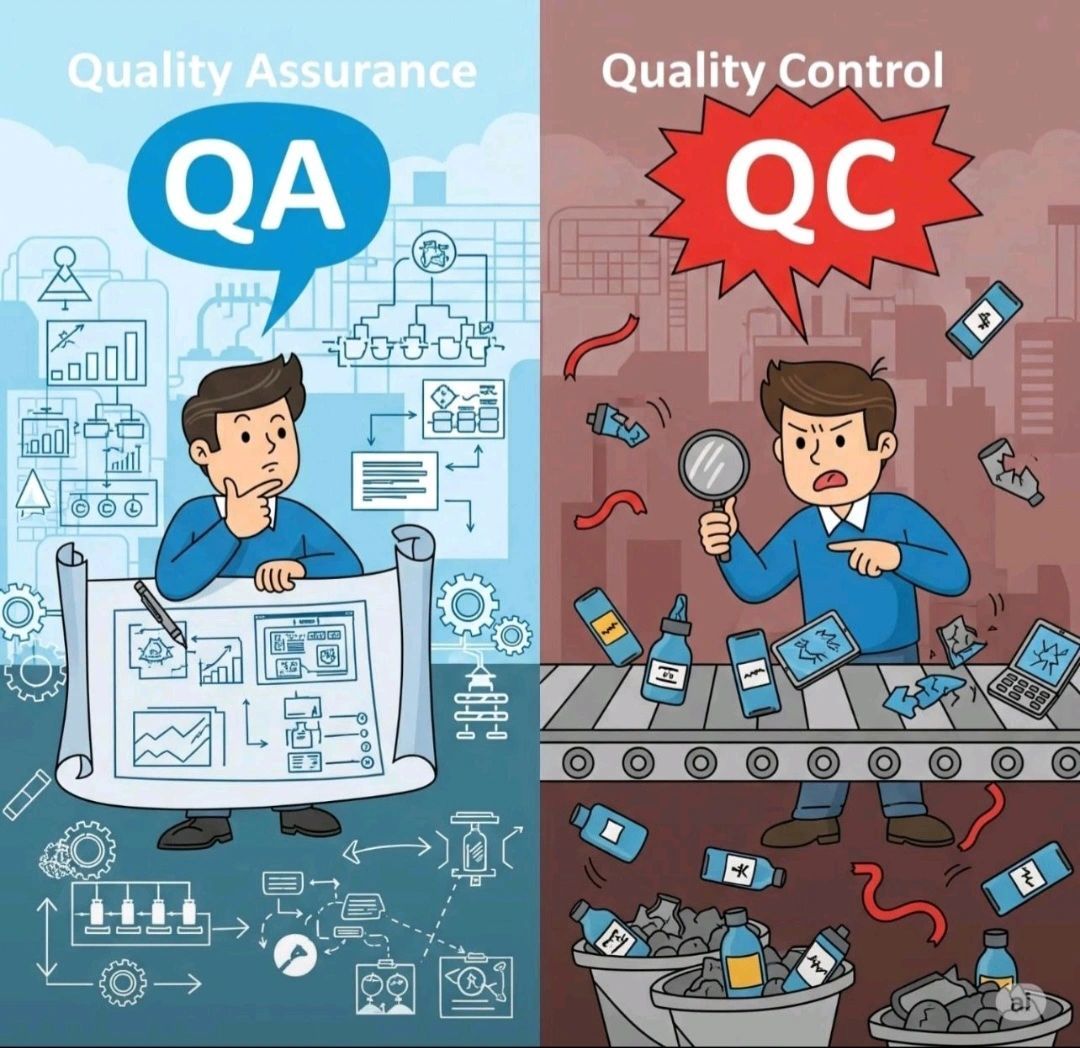
Many organizations confuse quality control testing with quality audit assessments. While both are essential components of comprehensive software quality assurance, they serve different purposes:
Quality control testing focuses on:
- Identifying defects in the actual software testing product
- Verifying that software meets specified requirements through rigorous QA testing
- Executing test cases to validate functionality
- Ensuring the product works as intended before release
Quality audit, by contrast, evaluates:
- Whether your testing process audit methodologies are effective
- If documented procedures in your quality assurance audit checklist are being followed
- How well your QA process audit aligns with software audit quality standards
- Where process improvements can eliminate waste and improve test management
Both are essential components of software quality assurance, but they operate at different levels. Think of quality control audit software as the bridge between these two approaches—it helps you audit the quality control processes themselves to ensure your audit testing protocols deliver consistent results.
The Expert's Guide to Quality Audit in Software Testing: Why the Right Partner Matters
When organizations invest in quality audit in software testing, they're making a critical business decision that impacts product reliability, regulatory compliance, and time-to-market. The wrong software testing audit company can delay projects, miss critical defects, or create friction with your development teams. The right partner becomes your competitive advantage—accelerating releases, reducing costs, and building customer trust.
This comprehensive guide evaluates the best QA audit and service providers across key dimensions: expert credentials, verified ratings, core capabilities, real-world performance, pricing transparency, and authentic case study results. Whether you're seeking QA audit services, comprehensive quality assurance audit checklist implementation, or complete software quality audit process transformation, this analysis provides the data you need to decide confidently.
Understanding the true quality audit software testing cost and quality audit software testing benefits.
1. AppSierra – The AI-Augmented QA Leader

Expert Review by Sarah Mitchell
QA Excellence Consultant, 18+ years in software quality
"AppSierra represents a paradigm shift in how organizations approach quality assurance. Their 72-hour deployment model combined with AI-augmented testing audit frameworks and zero-defect delivery methodology sets them apart. I've observed their impact across fintech, healthcare, and SaaS environments—consistently outperforming traditional QA audit models. Their approach to software testing quality audit excellence is unmatched."
Expert Ratings
- G2 Rating: 4.8/5 (300+ verified reviews)
- Clutch Rating: 4.9/5 (Enterprise-grade projects)
- Technology Excellence Score: 9.2/10
- Customer Satisfaction Index: 94%
Features
- AI-First QA Automation – Cypress, Playwright, Selenium with AI-powered test case generation reducing manual effort by 60%, part of their comprehensive software test audit process
- 72-Hour Rapid Deployment – Get verified QA engineers, SDETs, and cloud specialists deployed within 3 days of engagement for immediate QA testing audit support
- Zero-Defect Delivery Framework – Shift-left testing process methodology with 58% defect reduction achieved across client base
- Enterprise-Grade DevSecOps – Embedded security from CI/CD pipeline through production monitoring, ensuring testing standards compliance
- Global Talent Pods – Access vetted engineers with specialized expertise in AI/ML, blockchain, IoT, and cloud technologies for quality audit for software development
Pros
- Industry-leading 72-hour time-to-productivity eliminates lengthy onboarding cycles when you hire quality audit software testing talent
- Proprietary AI hiring platform (Pitch N Hire, OnJob.io) ensures cultural and technical alignment from day one for QA process audit initiatives
- Proven 58% defect reduction and 60% cost savings across 300+ successful software quality audit process projects
- Flexible scaling from 1 to 100+ engineers aligned to your roadmap milestones, ideal for comprehensive quality assurance audit programs
Cons
- Premium pricing reflects high-quality global talent and rapid deployment capabilities; quality audit software testing cost is higher than offshore-only providers
- Specialized AI/ML expertise commands additional investment compared to standard QA audit firms
- Requires clear technical requirements and project scope definition upfront for optimal test management
Pricing
- Project-Based: Custom quality audit software testing cost based on scope, complexity, and duration (starting at $15,000/month for team augmentation)
- Dedicated Teams: $25,000-$75,000+/month depending on team size and specialization (SDET, DevOps, AI/ML expertise) for comprehensive QA audit services
- Outcome-Based: ROI-focused pricing where costs align with defined defect reduction and delivery targets for software testing quality audit
- Hybrid Models: Combine fixed base + variable success-based components
- Cost Savings: Typical clients report 30-60% reduction in QA testing operational costs within 6 months
Case Study: FinTech Platform Acceleration
Challenge: A Series B fintech company was struggling with 45-day release cycles due to manual testing process bottlenecks. Production defects were averaging 8-12 per release, creating customer support friction and regulatory testing standards compliance concerns. Their in-house QA testing team was overwhelmed; new feature releases were delaying market launches that competitors were already executing.
AppSierra's Solution: Deployed a dedicated QA+SDET pod within 72 hours. Implemented shift-left software testing with automated security scanning, API testing, and regression automation. Built custom test management frameworks for payment processing workflows and software compliance audit validations. Established continuous monitoring in production to catch edge cases before customer impact using best QA audit tools.
Results Achieved:
- Release cycle compressed from 45 to 12 days (73% faster time-to-market) through optimized testing audit processes
- Production defects reduced from 8-12 per release to 0-2 per release (85% reduction) via rigorous quality control testing
- Test automation coverage increased from 25% to 87% of critical paths using quality control audit software
- Regulatory ISO testing audit pass rate improved from 87% to 99%
- Customer support tickets related to software quality audit process dropped 65%
- Annual cost savings: $2.4 million through faster releases and reduced support costs—demonstrating clear quality audit software testing benefits
What Clients Say:
"AppSierra didn't just execute audit testing—they transformed how we think about quality assurance. Their team became an extension of ours within weeks. The impact on our release confidence was immediate, and their software test audit process methodology became our competitive advantage."
— VP of Engineering, Series B FinTech
2. TestFort – Enterprise QA Powerhouse with 23+ Years Experience

Expert Review by David Chen
VP of Quality Assurance, Fortune 500 Technology Company
"TestFort's CMMI Level 3 certification isn't decorative—it reflects their systematic approach to quality audit. Their AI-enhanced testing audit frameworks and 250+ real device lab demonstrate serious investment in infrastructure. I've seen their work consistently deliver 87% test coverage across complex financial systems using proven quality assurance audit checklist methodologies."
Expert Ratings
- Clutch Rating: 4.7/5 (vetted agency)
- GoodFirms Rating: 4.8/5 (top-rated provider)
- CMMI Level 3: Certified (process maturity)
- ISO 27001:2013: Security certified
- Client Satisfaction: 92%
Features
- CMMI Level 3 Certified Processes – Mature, documented QA testing process methodologies with consistent delivery outcomes aligned with software audit quality standards
- 250+ Real Device Lab – Comprehensive mobile software testing across iOS, Android, and all major OS versions without emulator limitations
- AI-Powered Testing Tools – DeepTriage, ChatGPT integration, and Virtoso AI for intelligent test case generation supporting quality audit software testing initiatives
- Cross-Browser & Performance Testing – Automated testing process audit across 40+ browser combinations and network conditions
- Dedicated Testing Squads – Ready-made teams with specialized expertise (fintech, healthcare, e-commerce) for comprehensive QA audit services
Pros
- 23+ years in business with proven track record across 800+ successful quality audit software testing projects
- Comprehensive 250+ real device lab eliminates device compatibility surprises in software testing quality audit
- Four flexible business models (Time & Material, Staff Augmentation, Dedicated Team, Hybrid) for software QA audit outsource needs
- Average 4+ year project duration demonstrates strong client relationships and trust in their QA process audit capabilities
Cons
- Conservative approach sometimes slower to adopt cutting-edge technologies compared to startup-focused firms
- Higher resource utilization rates reflect premium quality and experience
- Longer initial assessment phase before project kickoff
Pricing
- Time & Material: $45-$75/hour depending on engineer level and expertise for flexible QA audit engagements
- Dedicated Teams: $8,000-$45,000/month based on team size and specialization for long-term quality assurance audit process template implementation
- Staff Augmentation: $50-$85/hour for integrating testers into your existing test management teams
- Project-Based: Custom estimates starting at $25,000 for comprehensive testing audit assessments
- Value-Added: Results-based pricing with defect reduction targets demonstrating quality audit software testing benefits
Case Study: AI Quality Audit for CI/CD Assistant
Challenge: A DevOps platform provider was deploying an AI-powered CI/CD workflow assistant. The solution was generating inconsistent recommendations, hallucinating configuration steps, and occasionally suggesting dangerous deployment patterns. Customer feedback indicated only 65% trust in the AI recommendations, creating adoption barriers for their software development pipeline tools.
TestFort's Approach: Conducted comprehensive AI quality audit combining manual testing process (understanding edge cases), automated validation (testing thousands of scenarios), and specialized usability testing. Created test scenarios for CI/CD workflows, configuration variations, and failure recovery paths. Implemented continuous monitoring framework to catch drift as the model evolved, following their proven quality assurance audit checklist.
Results Achieved:
- AI recommendation accuracy improved from 65% to 82% (23% increase) through rigorous audit testing
- Hallucination rate reduced by 60% through improved prompt engineering and quality control testing
- Critical AI defects identified: 25 high-severity issues caught before production via software test audit process
- User satisfaction jumped from 6.5 to 8.7 (33% improvement on 10-point scale) demonstrating quality audit software testing benefits
- Deployment confidence increased from 65% to 91% through systematic testing standards compliance
- False positive recommendations dropped by 50% using best QA audit tools methodologies
What Clients Say:
"TestFort's AI quality audit fundamentally changed how we think about testing intelligent systems. They didn't just find bugs—they helped us understand reliability patterns we weren't even measuring. Their software quality audit process expertise was invaluable."
— CTO, DevOps Platform Company
3. Cigniti Technologies – Digital Transformation QA Leader
Expert Review by Priya Kapoor
Director of Quality Assurance, Global Enterprise Consulting Firm
"Cigniti's position as a Coforge company, combined with 4,200+ digital champions and Fortune 500 client base, reflects serious enterprise credibility. Their 92% 4-star client rating and $500M+ cost savings delivered demonstrates tangible business impact. I recommend Cigniti for organizations requiring deep industry domain knowledge in software testing audit company services and comprehensive QA testing process optimization."
Expert Ratings
- Cigniti Client Rating: 92% (4/4 stars)
- Industry Recognition: Top 10 Digital Assurance providers globally
- Fortune 500 Clients: 60+ major enterprises trust Cigniti
- Annual Applications Assured: 10,000+
- Success Metric: $500M+ aggregate cost savings delivered
Features
- Industry-Specific QA Solutions – Deep expertise across banking, retail, healthcare, airlines, insurance sectors for specialized quality audit for software development
- AI & IP-Led Testing – Proprietary best QA audit tools and methodologies for digital transformation
- Enterprise-Scale Delivery – 4,200+ global QA testing professionals supporting complex software quality audit process projects
- Full-Stack Assurance – From infrastructure testing to application quality assurance to user experience validation
- Continuous Quality Monitoring – $3B+ daily transactions assured and validated through rigorous software audit protocols
Pros
- Massive global team (4,200+ specialists) ensures expertise depth across any industry vertical for comprehensive QA audit services
- 60+ Fortune 500 clients and 10+ year enterprise track record demonstrate reliability in testing process audit delivery
- Coforge backing provides financial stability and access to broader digital services including software compliance audit
- Proven ability to handle complex, multi-geography, multi-platform quality audit software testing initiatives with ISO testing audit requirements
Cons
- Large enterprise structure sometimes results in slower decision-making and adaptation in testing audit projects
- Pricing typically aligned to enterprise budgets; smaller companies may find quality audit software testing cost prohibitive
- Account management can vary depending on engagement size and priority level for QA process audit initiatives
Pricing
- Enterprise Contracts: Custom quality audit software testing cost based on scope, duration, and dedicated resource requirements
- Annual Engagements: $500,000-$5,000,000+ for comprehensive QA audit services partnerships
- Success-Based Models: Pricing tied to defined quality metrics software testing (defect reduction, cost savings, release velocity)
- Flexible Engagement: Scalable teams from 5 to 500+ engineers based on software quality audit process program evolution
- Typical Investment: Fortune 500 clients average $1.5-$3M annually for comprehensive test management operations
Case Study: Digital Banking Platform Transformation
Challenge: A major BFSI institution was modernizing legacy banking systems to cloud-based microservices architecture. New platform needed to maintain zero-downtime during migration, support real-time transaction processing for 2M+ daily users, meet regulatory software compliance audit (GDPR, PCI-DSS), and integrate seamlessly with existing customer-facing applications while maintaining testing standards compliance.
Cigniti's Approach: Deployed 120-person dedicated team including domain experts (financial services), cloud infrastructure specialists, security testers, and performance engineers. Implemented parallel testing process strategy validating both legacy and new systems simultaneously. Built automated regression suite (2,500+ test cases) ensuring feature parity. Conducted extensive software compliance audit validation and penetration testing using their proven quality assurance audit checklist.
Results Achieved:
- Zero-downtime migration completed successfully through meticulous software test audit process
- Transaction processing performance improved 28% (from 2.8 to 2.0 seconds average) via quality control testing
- Regulatory compliance validated across GDPR, PCI-DSS, SOX requirements using software audit quality standards
- Production defects: 0 critical issues, 3 high-severity (vs. historical average of 15-20 per release) demonstrating quality audit software testing benefits
- Customer satisfaction maintained at 95%+ during transition through rigorous QA testing
- Annual operational cost reduction: $8M through automation and testing process audit optimization
- ISO testing audit certification achieved on first attempt
What Clients Say:
"Cigniti managed a mission-critical platform transformation with precision we've never experienced. Their team understood not just software testing—they understood our banking domain, our regulatory world, and our customer experience imperatives. Their quality audit and QA process audit capabilities were exceptional."
— Chief Operating Officer, Major BFSI Institution
4. A1QA – Specialized Functional Testing Excellence

Expert Review by James Morrison
QA Strategy Lead, Enterprise Software Company
"A1QA's 20+ year focus on pure-play software testing creates deep expertise. Their ISO 9001 and ISO/IEC 27001 certifications, combined with global delivery model, make them reliable for enterprises. I've seen their work excel in functional testing, automation strategy, and complex legacy system audits. Their approach to what is quality audit in software testing sets industry standards."
Expert Ratings
- Clutch Rating: 4.6/5 (19 verified reviews)
- Industry Recognition: Top QA consultancy (multiple analyst reports)
- ISO 9001:2015: Quality management certified
- ISO/IEC 27001: Information security certified
- Client Retention Rate: 85%+ (multi-year engagements)
Features
- Pure-Play QA Focus – 20+ years exclusively dedicated to quality audit software testing (no competing service lines)
- Global Delivery Model – Offices in USA, UK, Poland, Georgia, Mexico, Bangladesh ensuring 24/7 QA testing process coverage
- Comprehensive Testing Services – Functional, automation, performance, security, big data testing aligned with software audit quality standards
- Proprietary QA Academy – Internal training programs keeping team current with latest best QA audit tools and methodologies
- Advanced Automation Tools – Selenium, Cypress, Appium, AI/ML-powered test frameworks for quality control audit software
Pros
- Deep specialization in QA consulting creates reliable, focused expertise for testing audit initiatives
- Strong security and quality certifications (ISO 9001, ISO 27001) provide software compliance audit confidence
- Global delivery model enables 24/7 testing process audit cycles and cost flexibility
- Seamless integration with complex enterprise projects praised by clients needing hire quality audit software testing experts
Cons
- Pricing higher than offshore-only firms (reflects quality and specialization premium for quality audit software testing cost)
- Longer onboarding timeline compared to agile-focused competitors for QA audit projects
- Consulting-focused approach may result in higher upfront quality assurance audit assessment costs
Pricing
- Consulting Services: $150-$250/hour for QA process audit strategy and audit services
- Dedicated Teams: $30,000-$80,000+/month for long-term software quality audit process partnerships
- Project-Based Testing: Custom estimates; typical ranges $50,000-$500,000 depending on quality audit for software development scope
- Flexible Engagement: Hourly, project-based, or dedicated models available for QA audit services
- Transparency: Clear pricing with detailed breakdown; no hidden fees or surprise charges in quality audit software testing cost
Case Study: Enterprise QA Process Transformation
Challenge: A Fortune 500 financial services company's QA testing operation was fragmented: multiple testing process approaches across business units, inconsistent documentation standards, 40-50% manual test case execution despite $2M annual testing tool investment, and software audit findings citing "uncontrolled testing processes."
A1QA's Approach: Conducted comprehensive 12-week QA process audit across 8 business units. Evaluated testing process audit strategy, process maturity, tooling, resource allocation, and training. Developed standardized software quality assurance framework addressing industry best practices and regulatory requirements using proven quality assurance audit process template. Built centralized test case repository with traceability matrix. Implemented process governance and testing standards compliance tracking using best QA audit tools.
Results Achieved:
- QA testing process standardization achieved across all business units
- Test automation increased from 35% to 75% of test cases through quality control audit software
- Manual testing process effort reduced by 45% (annual savings: $850,000) demonstrating quality audit software testing benefits
- Defect escape rate improved from 12% to 3% of production issues via rigorous audit testing
- Software audit findings resolved; certified compliant by external auditors for ISO testing audit
- Release cycle improved from 30 to 18 days average through optimized test management
- Team efficiency improved by 40% through software test audit process optimization
- Quality metrics software testing tracking implemented organization-wide
What Clients Say:
"A1QA transformed our QA testing chaos into controlled, predictable quality assurance. Their consulting approach meant we built capability internally—not just rented services. The impact on our business has been measurable and sustainable. Their understanding of how to conduct quality audit software testing was transformative."
— Head of Quality Assurance, Fortune 500 BFSI
5. Beetroot – Agile QA with Risk-Based Testing Focus

Expert Review by Emma Richardson
Agile QA Coach, Digital Transformation Practice
"Beetroot's risk-based testing audit approach and focus on team integration resonates with agile-driven organizations. Their transparent hourly pricing ($19-$60/hour depending on specialization), flexible engagement models, and human-centered approach appeal to SMEs and growth-stage companies. I've observed their QA internal audit specialists deliver significant testing process audit improvements and help organizations understand why quality audit important testing."
Expert Ratings
- Clutch Rating: 4.5/5
- Client Satisfaction: 89% (recommend to others)
- Specialization: Manual QA, automation, mobile testing, QA auditing
- Team Expertise: 50+ QA professionals globally
- Project Average Duration: 6-18 months
Features
- Risk-Based Testing Approach – Prioritize high-impact scenarios; reduce testing process effort on low-risk areas
- Manual & Automation Hybrid – Combine human exploratory quality control testing with efficient automation
- QA Audit Services – Process assessment, software compliance audit validation, efficiency improvement recommendations
- Mobile App Testing – iOS and Android expertise with performance and compatibility validation for comprehensive software testing
- Team Integration Model – Embed Beetroot QA testing professionals into your existing workflows seamlessly
Pros
- Highly transparent, hourly-based pricing ($19-$60/h) with no hidden costs or surprise charges—accessible quality audit software testing cost
- Risk-based testing audit approach optimizes resource allocation for maximum quality impact
- Flexible team models enable scaling from single specialist to 20+ person QA audit teams
- Strong focus on team training and knowledge transfer ensures long-term software quality assurance capability building
Cons
- Smaller global team (50+ professionals) limits availability for very large-scale quality audit software testing projects
- Time-and-materials pricing can be difficult to forecast for long-term, large-scale QA process audit initiatives
- Less suitable for organizations requiring deep industry domain specialization in software audit quality standards
Pricing
- Manual QA Engineers: $19-$40/hour (Middle to Senior levels available) for audit testing
- QA Specialists: $35-$60/hour (Audit specialists, automation architects) for software test audit process
- Flexible Engagement: Monthly minimums starting at 40-80 hours; scale up/down based on QA testing process needs
- Monthly Teams: $3,000-$15,000/month for dedicated QA audit services support (100-160 hours)
- Project-Based: Custom quotes for 2-6 month focused quality audit or testing process audit initiatives
Case Study: QA Process Audit for SaaS Startup
Challenge: A Series A SaaS company managing customer success software was experiencing increasing customer churn attributed to software testing quality issues. QA process was ad-hoc: testing happened only after software development was "complete," test cases weren't documented, defect tracking was in Excel spreadsheets, and regulatory software compliance audit requirements weren't being systematically verified.
Beetroot's Approach: Conducted comprehensive QA process audit identifying process gaps and creating improvement roadmap using their proven quality assurance audit checklist. Implemented shift-left testing process methodology moving QA testing earlier in development cycle. Established test management system (TestRail) with documented test cases and traceability. Built automated regression suite (400+ test cases) for critical workflows. Trained internal team on testing standards compliance requirements and best practices aligned with software audit quality standards.
Results Achieved:
- QA testing process maturity improved from ad-hoc (Level 1) to managed (Level 3)
- Time-to-market improved 35% through earlier quality assurance integration
- Production defects reduced from 25-30 per quarter to 3-5 per quarter (85% reduction) through quality control testing
- Customer satisfaction scores increased 28% (attributed partly to improved software quality assurance)
- Software compliance audit pass rate improved from 40% to 95% using quality assurance audit process template
- Testing audit efficiency improved 40% through automated regression and prioritized testing
- Customer churn stabilized and reversed within 6 months—demonstrating clear quality audit software testing benefits
- Quality metrics software testing dashboards implemented for ongoing monitoring
What Clients Say:
"Beetroot didn't just audit our QA process—they coached us through building a better one. The team's training was practical and immediately applicable. We now have a software quality assurance foundation that scales with our growth. Understanding when to conduct quality audit software assessments became part of our culture."
— CTO, Series A SaaS
6. Synoptek – Infrastructure & IT Quality Assurance

Synoptek excels in IT infrastructure assessment and quality assurance for complex environments. Their 24/7 helpdesk model and managed IT services integration position them well for organizations needing infrastructure-level testing audit combined with traditional software testing capabilities.
Key Strengths:
- Integrated IT and quality audit services for end-to-end reliability
- 24/7 support reduces infrastructure-related software quality audit process issues
- Strong ERP implementation test management expertise
- Comprehensive software compliance audit capabilities (HIPAA, PCI-DSS, SOC
Expert Review by Michael Torres
IT Infrastructure Director, Enterprise Corporation
- "Synoptek's strength lies in IT infrastructure assessment and quality assurance for complex environments. Their 24/7 helpdesk model and managed IT services integration position them well for organizations needing infrastructure-level quality audits. I'd recommend them for enterprises with significant IT operations complexity."
Expert Ratings
- Clutch Rating: 4.2/5 (verified client reviews)
- ERP Implementation Success: 95%+ on-time delivery
- Client Testimonials: "They take time to listen and understand the business"
- Service Response Time: 24/7 helpdesk support
- Industry Verticals: Media, finance, healthcare, manufacturing
Features
- IT Infrastructure Assessment – Comprehensive evaluation of servers, networks, storage, security protocols
- ERP Implementation & Quality Assurance – SAP, Oracle, Microsoft Dynamics expertise with quality validation
- 24/7 Managed IT Services – Continuous monitoring, support, and infrastructure optimization
- Cybersecurity Services – Security audit, vulnerability assessment, penetration testing
- Compliance & Regulatory Validation – HIPAA, PCI-DSS, SOC 2 compliance verification
Pros
- Integrated IT and quality services allow end-to-end infrastructure reliability assurance
- 24/7 support and continuous monitoring reduce infrastructure-related quality issues
- Proven track record on complex ERP implementations with strong success metrics
- Proactive approach to identifying infrastructure vulnerabilities before impact
Cons
- Infrastructure-focused approach may not suit organizations seeking primarily software QA testing
- Pricing complexity with multiple service components can be challenging to forecast
- Smaller organization (compared to Cigniti or A1QA) may limit global scale capabilities
Pricing
- Infrastructure Assessment: $15,000-$50,000 depending on environment complexity
- Managed IT Services: $3,000-$20,000+/month based on infrastructure scope
- ERP Implementation QA: $80,000-$500,000+ for full implementation lifecycle quality assurance
- 24/7 Support: $1,500-$5,000/month depending on support tier and environment
- Project-Based: Custom pricing for one-time assessments and optimization initiatives
Case Study: Manufacturing ERP Implementation Quality Assurance
Challenge: A mid-sized manufacturing company was implementing integrated ERP system to replace legacy financial and operations systems. Implementation required: coordinating manufacturing, supply chain, financial, and HR modules; minimal downtime during cutover; data migration from 15+ legacy systems; user training across 300+ personnel; regulatory compliance in automotive supply industry.
Synoptek's Approach: Provided dedicated QA team (8 professionals) throughout implementation lifecycle. Developed comprehensive test scenarios across all modules and integrations. Performed parallel testing (legacy and new systems simultaneously) before final cutover. Conducted extensive data validation ensuring accuracy of migrated records. Provided 24/7 support during cutover week.
Results Achieved:
- Implementation completed on-time and within budget
- Zero critical defects in production; 2 medium-severity issues identified and resolved quickly
- Data migration verified with 99.97% accuracy
- User adoption rate: 92% within first month
- Financial close cycle improved from 7 to 3 days post-implementation
- Inventory accuracy improved from 94% to 99%
- Supply chain visibility improved significantly
What Clients Say:
"Synoptek's ERP implementation quality assurance was thorough and professional. Their 24/7 support during cutover was invaluable. We've had minimal post-go-live issues compared to peers' experiences."
— VP of Operations, Manufacturing Company
7. QA Mentor – Budget-Conscious Offshore QA Excellence
QA Mentor represents exceptional value for startup and SME organizations seeking affordable quality audit software testing cost without compromising quality. Their tiered hourly pricing ($17-$35/hour) makes professional QA audit services accessible to organizations with limited budgets.
Key Strengths:
- Industry-lowest transparent pricing for quality audit software testing
- Flexible engagement models for software test audit process initiatives
- Strong training component builds internal QA testing process capability
- Comprehensive service offerings across functional, automation, performance, and security audit testing
Expert Review by Rajesh Kumar
QA Director, Tech Startup Ecosystem
"QA Mentor represents exceptional value for startup and SME organizations. Their hourly pricing model ($17-$35/hour depending on service type) provides budget flexibility. I've seen their work deliver solid quality outcomes for companies with cost constraints. Their training and mentoring approach builds internal capability beyond just service delivery."
Expert Ratings
- G2 Rating: 4.3/5
- Value for Money: 9.2/10 (industry-leading affordable pricing)
- Service Quality: 4.4/5 (consistent execution)
- Client Retention: 78% renewal rate
- Team Size: 150+ QA professionals
Features
- Tiered Pricing by Service Type – Functional ($20/h), automation ($24/h), performance ($25/h), security testing ($26/h)
- Compatibility Testing – Browser/OS/Mobile matrix coverage at competitive rates ($17-$25/h)
- Technical Testing – Database, API, REST services expertise ($19-$25/h)
- Dedicated Teams Available – For long-term engagements with committed resource pools
- Training & Knowledge Transfer – Mentor your team to reduce long-term dependency
Pros
- Industry-lowest transparent hourly pricing enables SME and startup access to quality QA services
- Service tiering by complexity allows budget optimization (pay less for simpler testing types)
- Flexible engagement models: hourly, weekly retainers, or project-based arrangements
- Strong training and mentoring component helps build internal QA capability
Cons
- Smaller organization limits ability to scale to very large initiatives (100+ engineers)
- Offshore delivery model may introduce communication or timezone coordination challenges
- Limited industry specialization compared to domain-focused firms
- May require more guidance for complex regulatory compliance requirements
Pricing
- Functional Testing: $20/hour base; $23/h mid-level; $26/h senior level; $29/h architect
- Automation Testing: $24/h base; $27/h mid; $30/h senior; $33/h architect
- Performance Testing: $25/h base; $28/h mid; $31/h senior; $34/h architect
- Security Testing: $26/h base; $29/h mid; $32/h senior; $35/h architect
- Minimum Engagements: 40-80 hours/week; scale based on project needs
Case Study: Mobile App Testing at Scale for EdTech Startup
Challenge: An EdTech startup launching mobile learning application across iOS and Android needed comprehensive testing before market launch. Budget constraints ($50,000 for complete testing) prevented engaging premium firms. Testing requirements: functional testing across 25+ learning modules, compatibility testing across 15+ device/OS combinations, performance testing under 10,000+ concurrent users, security testing for student data protection.
QA Mentor's Approach: Deployed team of 5 QA professionals (mix of functional testers, automation engineer, performance tester) on dedicated engagement. Created comprehensive test plan covering all modules and user scenarios. Built automated regression suite (600+ test cases) for rapid validation. Conducted performance testing identifying scalability bottlenecks. Executed security testing validating data encryption and authentication mechanisms.
Results Achieved:
- Comprehensive testing completed within $50,000 budget constraint
- 98% of planned test cases executed successfully
- 45 defects identified and fixed before launch; zero critical issues post-launch
- Performance testing identified and resolved scalability issue (app had degraded at 5,000 concurrent users—fixed to handle 15,000+)
- Security audit passed with no critical vulnerabilities
- App launched on-time; achieved 4.7-star rating in first month
- Installation volume exceeded 100,000 in first 3 months with minimal quality-related support issues
What Clients Say:
"QA Mentor proved quality assurance didn't require Fortune 500 budgets. Their team was thorough, communicative, and delivered professional results that matched services costing 3x more. Perfect for startup stage companies."
— Founder/CEO, EdTech Startup
8. Indium Software – Enterprise IoT & Complex Systems Testing
Indium Software specializes in IoT and embedded systems software testing, filling a critical niche in the quality audit market. Their expertise in protocol testing, firmware validation, and edge computing makes them ideal for organizations building connected products requiring specialized software quality audit process approaches.
Key Strengths:
- Deep IoT/embedded systems testing audit specialization
- Protocol validation and firmware quality control testing expertise
- AI/ML testing frameworks for intelligent systems
- Strong track record in healthcare, manufacturing, automotive software audit domains
Expert Review by Dr. Patricia Okonkwo
Quality Engineering Director, Connected Devices Company
"Indium Software's specialization in IoT and embedded systems testing fills a critical gap. Their expertise in protocol testing, firmware validation, and edge computing resonates with enterprise organizations building connected products. I recommend them for companies needing deep technical expertise beyond standard functional testing."
Expert Ratings
- Clutch Rating: 4.7/5 (21 verified reviews)
- Industry Recognition: Top IoT testing specialist
- Global Team Size: 300+ QA professionals
- Headquarters: California, USA (with offices in UK, Singapore, India)
- Specialization: IoT, IIoT, embedded systems, AI/ML testing
Features
- IoT & IIoT Testing Expertise – Protocol validation, firmware testing, edge device certification
- Embedded Systems Specialized – RTOS, embedded firmware, hardware-software integration validation
- API & Microservices Testing – Comprehensive validation of distributed, containerized architectures
- AI/ML Testing Framework – Custom testing approaches for machine learning models and inference pipelines
- Onshore/Offshore Delivery – Flexible delivery models leveraging California onshore + India offshore cost efficiency
Pros
- Deep specialization in IoT/embedded systems addresses critical gap in enterprise testing market
- Strong technical expertise in protocol testing, firmware validation, edge computing
- Global team (300+ professionals) enables scaling across complex initiatives
- Proven track record with enterprise clients across healthcare, manufacturing, automotive
Cons
- Specialization in IoT means less breadth in other testing domains (e-commerce, SaaS, etc.)
- Embedded systems expertise commands premium pricing versus general QA firms
- Smaller onshore presence may affect project communication for onsite-preference organizations
Pricing
- Project-Based: $75,000-$500,000+ depending on complexity and duration (typical 3-9 month engagements)
- Dedicated Teams: $40,000-$120,000+/month for long-term IoT initiatives
- Time & Materials: $60-$120/hour for specialized expertise (protocol engineers, firmware specialists)
- Onshore/Offshore Blend: Premium for onshore architects; cost-effective offshore execution teams
- Value-Based: Results-driven pricing available for defect reduction or performance improvement targets
Case Study: Industrial IoT Gateway Firmware Validation
Challenge: An industrial automation company developed IoT gateway device managing sensor data from manufacturing equipment, cloud connectivity, and local edge processing. Firmware required certification for manufacturing facilities in regulated environments. Testing challenges: 50+ communication protocols, 200+ supported sensor types, edge ML inference validation, industrial-grade reliability requirements.
Indium's Approach: Deployed embedded systems specialists for comprehensive firmware validation. Created test environment replicating real manufacturing conditions with 100+ device types and protocol combinations. Developed automated test harness validating protocol implementations, firmware stability, and ML inference accuracy. Conducted security validation ensuring device authentication and data encryption. Performed stress testing under industrial operating conditions.
Results Achieved:
- Firmware validation completed successfully; zero critical defects identified
- Protocol compliance verified across 50+ communication standards
- ML inference accuracy validated at 99.2% (vs. requirement of 99%+)
- Stress testing under 24-hour manufacturing operation scenarios: 0 failures
- Security audit passed with no vulnerabilities
- Gateway certified for major manufacturing facility deployments
- Device achieved 99.7% uptime in production across 500+ installations
What Clients Say:
"Indium's embedded systems and IoT expertise was exactly what we needed. Their firmware validation caught issues we would never have found through traditional software testing. The investment in specialized expertise paid for itself immediately."
— VP of Product Engineering, Industrial Automation Company
9. Zymr – Quality Engineering & DevOps-Integrated Testing

Zymr integrates quality assurance with modern DevOps practices, positioning them well for organizations embracing continuous delivery. Their QA process audit services combined with cloud-native software testing expertise appeal to fintech and modern software development teams.
Key Strengths:
- DevOps-integrated testing process audit for CI/CD environments
- Strong FinTech software compliance audit specialization
- Cloud-native application test management expertise
- Reasonable quality audit software testing cost with flexible models
Expert Review by Lisa Chen
Director of Quality Engineering, FinTech Innovation Firm
"Zymr's integration of quality assurance with DevOps practices positions them well for organizations embracing continuous delivery. Their QA assessment services and cloud-native testing expertise appeal to modern organizations. I've observed their work excel in fintech and cloud-native application testing."
Expert Ratings
- G2 Rating: 4.4/5
- Client Testimonials: Strong fintech and banking focus
- Specialization: FinTech, banking, cloud-native applications, performance testing
- Team Size: 150+ QA professionals
- Geographic Coverage: California HQ with India development centers
Features
- QA Assessment Services – Code review, security evaluation, legacy software assessment
- DevOps-Integrated Testing – Continuous testing in CI/CD pipelines; shift-left emphasis
- FinTech Specialization – Banking, payment processing, trading platforms, regulatory compliance testing
- Cloud-Native Testing – Microservices, Kubernetes, serverless architecture validation
- UI/UX Testing Services – Usability validation, accessibility testing, user experience assessment
Pros
- DevOps integration enables seamless fit into modern development practices
- Strong FinTech expertise addresses regulated industry requirements effectively
- Cloud-native application testing expertise aligns with modern architecture trends
- Reasonable pricing with flexible engagement models
Cons
- Smaller team (150+ professionals) limits availability for massive-scale initiatives
- DevOps-first approach may not suit traditional waterfall organizations
- Limited industry specialization beyond FinTech and cloud-native domains
Pricing
- QA Assessment: $20,000-$80,000 for comprehensive code review and security evaluation
- Dedicated Teams: $35,000-$100,000+/month depending on team size and specialization
- Time & Materials: $55-$110/hour for specialized expertise
- Project-Based: Custom pricing for 3-12 month cloud-native or FinTech initiatives
- Flexible Scaling: Month-to-month arrangements with minimal commitment
Case Study: Fintech Trading Platform Migration to Cloud-Native Architecture
Challenge: Fintech trading platform was monolithic on-premises system handling $50B+ daily transaction volume. Business requirement: migrate to cloud-native, microservices architecture enabling 10x feature velocity while maintaining zero-downtime during transition and regulatory compliance across multiple jurisdictions.
Zymr's Approach: Integrated QA into every migration phase. Implemented continuous testing in CI/CD pipelines for rapid validation. Built automated test suites (5,000+ test cases) validating microservices interactions. Established performance baselines ensuring migration didn't impact latency-sensitive trading workflows. Conducted comprehensive compliance validation (regulatory requirements across US, EU, APAC).
Results Achieved:
- Zero-downtime migration completed successfully
- Feature deployment velocity increased 8x (from monthly to daily releases)
- Production defects reduced 72% through continuous testing
- Performance maintained: 99.99% uptime with sub-50ms latency
- Regulatory compliance validated across all jurisdictions
- Development team productivity increased 65%
- Infrastructure costs reduced 40% through cloud optimization
What Clients Say:
"Zymr's DevOps-integrated testing approach was transformational. Their continuous quality validation gave us confidence to release multiple times daily—something impossible with our legacy architecture."
— CTO, FinTech Trading Platform
The Complete Quality Audit Software Testing Checklist: What Gets Evaluated
When conducting a comprehensive software test audit process, expert assessors evaluate these critical areas:
Testing Strategy & Planning
- Is there a documented testing strategy aligned with business objectives?
- Does the test management plan cover all required testing types (unit, integration, system, acceptance)?
- Are test objectives, scope, timelines, and resource requirements clearly defined?
- Has risk assessment been conducted to prioritize testing efforts?
- Does the organization have a testing process audit methodology documented?
Test Case Design & Coverage
- Are test cases comprehensive, including positive scenarios, negative scenarios, edge cases, and boundary conditions?
- Is there traceability between requirements and test cases?
- Does the organization have a systematic approach to audit testing based on risk prioritization?
- Are test cases regularly reviewed, updated, and maintained as requirements change?
- Is there evidence that test cases achieve adequate code and functional coverage?
Test Execution & Defect Management
- Are tests executed according to documented procedures?
- Is there a clear quality control audit software process for logging, tracking, and resolving defects?
- Does the organization follow a structured defect management process with defined severity levels and resolution timelines?
- Are defect trends analyzed to identify systemic issues?
- Is there evidence of root-cause analysis for recurring defects?
Test Environment & Data Management
- Is the test environment configuration documented and maintained?
- Does the test environment closely match production specifications?
- Are test data requirements identified and managed systematically?
- Is there evidence that test data is realistic and representative of production scenarios?
- Are sensitive data handling procedures followed during testing?
Documentation & Record Keeping
- Are all testing procedures, policies, and standards documented in a centralized, accessible location?
- Are documentation updates tracked with version control and approval trails?
- Is there evidence that documentation is being followed in practice?
- Are audit trails maintained for all testing activities and changes?
- Does the organization maintain quality audit software testing cost tracking and metrics?
Quality Standards & Compliance
- Is the organization aligned with relevant software audit quality standards (ISO 27001, ISO 9001, industry-specific standards)?
- Are testing standards compliance requirements systematically tracked?
- Does the organization conduct regular internal audits?
- Are corrective and preventive actions tracked through completion?
- Is there evidence of management commitment to quality and continuous improvement?
Team Competency & Training
- Does the organization have a training program for QA personnel?
- Are training records maintained and current?
- Have team members received training on relevant standards, tools, and best practices?
- Is there a process for identifying and closing skill gaps?
- Are QA professionals given opportunities for professional development?
Test Automation & Tooling
- Are test automation tools being used effectively to increase test coverage?
- Is there a documented strategy for which tests to automate?
- Are automated test scripts maintained as requirements change?
- Does the organization use test management tools effectively?
- Are tool capabilities being leveraged to improve efficiency and visibility?
How to Conduct Quality Audit in Software Testing: The Step-by-Step Process

Conducting an effective quality audit software testing assessment requires systematic planning and execution. Understanding what is quality audit in software testing helps establish the foundation for this process.
Phase 1: Planning & Preparation
Step 1: Define Audit Scope
- Determine which testing processes, teams, and projects will be included
- Identify the audit's primary objectives (compliance verification, process improvement, risk assessment)
- Define the audit criteria and success metrics
Step 2: Establish Audit Team
- Select audit team members with relevant QA expertise and independence from the processes being audited
- Ensure auditors have deep knowledge of industry standards and best practices
- Clearly define roles and responsibilities
Step 3: Create an Audit Plan Develop a detailed quality assurance audit process template with:
- Audit objectives and scope
- Timeline and schedule
- Audit procedures and methodology
- Resources required
- Key stakeholders to interview
- Documentation to review
Step 4: Prepare Audit Checklist
- Develop a comprehensive QA testing audit checklist aligned with your organization's standards and regulatory requirements
- Include specific questions for each audit area (strategy, design, execution, documentation, compliance)
- Identify key performance indicators and quality metrics software testing to assess
Phase 2: Information Gathering & Evidence Collection
Step 5: Document Review
- Analyze testing procedures, policies, and standards
- Review test plans, test cases, and testing documentation
- Examine defect reports and resolution records
- Assess compliance documentation and audit trails
- Evaluate training records and team qualifications
Step 6: Process Observation & Testing
- Observe QA teams executing actual testing activities
- Verify that documented procedures are being followed in practice
- Review test execution logs and test result reports
- Analyze tool configurations and data to understand process effectiveness
Step 7: Stakeholder Interviews
- Conduct interviews with QA managers, test engineers, and development team members
- Ask about process challenges, pain points, and improvement opportunities
- Gather perspectives on tool effectiveness and resource constraints
- Understand how teams actually execute processes (versus how procedures say they should)
Phase 3: Analysis & Findings
Step 8: Evaluate Evidence
- Compare actual practices against audit criteria and standards
- Identify areas of conformance and non-conformance
- Prioritize findings by severity and business impact
- Document specific evidence supporting each finding
Step 9: Determine Root Causes For each non-conformance, dig deeper to understand root causes. Typical root causes include:
- Inadequate or outdated procedures
- Insufficient training or awareness
- Resource constraints preventing proper execution
- Tool limitations or ineffective tool usage
- Lack of management support or prioritization
- Process complexity or poor design
Step 10: Develop Recommendations
- For each finding, develop specific, actionable recommendations
- Prioritize recommendations by impact and feasibility
- Include implementation approaches and success metrics
- Estimate resources and timelines for implementation
Phase 4: Reporting & Action Planning
Step 11: Prepare Audit Report
- Summarize audit objectives, scope, and methodology
- Present findings organized by category (strategy, design, execution, documentation, etc.)
- Include specific evidence supporting each finding
- Provide prioritized recommendations ranked by severity and impact
- Document positive practices and areas of strength
Step 12: Present Findings to Stakeholders
- Meet with QA leadership and relevant stakeholders
- Clearly communicate findings and their business implications
- Discuss recommendations and implementation approaches
- Establish expectations for corrective action planning
Step 13: Develop Corrective Action Plan
- Create an action plan addressing each significant finding
- Assign ownership and define timelines for each action
- Establish success metrics and verification methods
- Schedule follow-up audits to verify corrective actions
Understanding how to conduct quality audit software testing involves mastering each of these phases systematically.
Quality Audit Software Testing Benefits: What Actually Improves

Organizations that implement comprehensive quality audits experience tangible, measurable improvements. Understanding quality audit software testing benefits helps justify the investment:
Improved Product Quality & Reduced Defects
- Defect leakage to production decreases as testing processes become more rigorous and consistent
- Teams identify and fix more defects during testing rather than in production
- Root-cause analysis becomes systematic, preventing recurring defects
- Result: Up to 50% reduction in production defects, dramatically improving customer satisfaction
Accelerated Release Cycles
- Removal of wasteful manual processes and redundant activities frees testing resources
- Better test coverage and systematic testing approaches reduce regression issues
- Fewer production defects mean fewer post-release hotfixes delaying next releases
- Result: Faster time-to-market and more frequent, reliable releases
Reduced Testing Costs
- Elimination of manual, repetitive work reduces labor requirements
- Reusable test cases and test data reduce duplication across projects
- Fewer production defects mean lower customer support costs
- Automation becomes more effective as processes are documented and standardized
- Result: QA teams achieve better coverage with existing resources
Regulatory Compliance & Reduced Risk
- Documented procedures and audit trails demonstrate regulatory compliance
- Systematic process verification reduces compliance violations and audit findings
- Corrective action tracking ensures problems are resolved systematically
- Result: Pass audits decisively, avoid fines, and reduce legal exposure
Enhanced Team Productivity & Morale
- Clear procedures eliminate confusion about how to execute testing activities
- Training programs ensure team members have necessary skills and knowledge
- QA professionals can focus on strategic activities instead of administrative busywork
- Career development opportunities improve retention
- Result: 25-36% improvement in operational efficiency and team engagement
Better Risk Management
- Systematic risk assessment ensures testing efforts target high-impact areas
- Risk-based testing approach improves resource allocation efficiency
- Early identification of potential issues prevents costly downstream problems
- Result: More confident release decisions backed by data
Competitive Advantage
- Superior product quality builds customer loyalty and brand reputation
- Faster releases get features to market before competitors
- Demonstrated quality becomes a sales advantage for B2B services
- Result: Market position strengthens and customer acquisition costs decrease
Common Quality Audit Findings—And Why They Matter
When we conduct quality audits, we consistently identify recurring issues that organizations must address. Understanding these common pitfalls helps you prepare:
Finding #1: Inadequate or Outdated Procedures
What we typically see:
- Testing procedures are documented but haven't been updated in years
- Procedures don't match how teams actually execute testing
- New team members don't follow procedures because they're unclear or impractical
- No version control or approval trails for procedure updates
Why it matters:
- Inconsistent testing processes lead to inconsistent results
- New auditors, regulators, or clients see outdated procedures as evidence of poor process control
- Teams work inefficiently without clear guidance
- Compliance violations occur because requirements aren't systematically tracked
Solution:
- Establish a formal procedure management process with regular reviews and updates
- Ensure procedures are practical, clear, and reflect actual workflows
- Implement version control and approval tracking for all procedure changes
- Use a centralized, accessible repository for all QA documentation
Finding #2: Lack of Test Data Management
What we typically see:
- Test data is created ad-hoc without systematic approach
- Sensitive production data is used in test environments (compliance violation)
- Test data doesn't represent realistic production scenarios
- No documentation of what test data exists or where it's stored
Why it matters:
- Unrealistic test data leads to false confidence that software will work in production
- Using production data violates compliance requirements (GDPR, HIPAA, etc.)
- Teams spend time creating similar test data for each project instead of reusing
- Data privacy violations create regulatory and legal exposure
Solution:
- Develop a test data strategy identifying what data is needed for testing
- Create realistic test datasets that represent production scenarios
- Implement data masking and anonymization for any sensitive data
- Maintain centralized test data repository with documentation
- Establish access controls and audit trails for test data usage
Finding #3: Poor Documentation & Record Keeping
What we typically see:
- Test case documentation is scattered across multiple systems
- Defect reports lack required detail for understanding and fixing issues
- No audit trails showing who made changes or when
- Version control isn't used—teams manually track versions in file names
- Manual spreadsheets track information that should be in test management tools
Why it matters:
- Auditors can't verify compliance without documentation
- Defect resolution slows when information is incomplete or scattered
- Root-cause analysis becomes impossible without adequate defect details
- Manual processes consume enormous time and are error-prone
Solution:
- Implement test management tools to centralize test case storage and execution
- Establish documentation standards requiring specific information (environment, data, results, etc.)
- Use version control systems with audit trails for all important documents
- Implement defect tracking systems with required fields for severity, environment, steps, etc.
- Create documentation processes that are systematic and automated where possible
Finding #4: No Risk-Based Test Prioritization
What we typically see:
- Testing efforts are evenly distributed across all features instead of focusing on high-risk areas
- Low-risk functionality receives extensive testing while critical features are under-tested
- Resource constraints force cuts without systematic risk assessment
- No documented risk assessment or testing prioritization approach
Why it matters:
- Testing resources are wasted on low-impact areas
- High-risk functionality that needs intensive testing gets insufficient attention
- When cuts must be made, they're made inefficiently
- Defect escape rates remain high because high-risk areas aren't adequately tested
Solution:
- Conduct formal risk assessment identifying high, medium, and low-risk features
- Develop risk-based testing strategy allocating resources based on risk
- Document risk assessment methodology and results
- Periodically review and update risk assessments as product changes
- Use risk assessment to guide automation priorities
Finding #5: Insufficient Training & Competency Gaps
What we typically see:
- New QA team members receive minimal training before joining projects
- No formal training program on testing methodologies, tools, or standards
- Team members lack understanding of compliance requirements
- Certification and skill development opportunities aren't provided
- Training records aren't maintained
Why it matters:
- Inconsistent test execution when team members lack necessary skills
- Compliance violations occur because team members don't understand requirements
- Employee retention suffers when professional development is lacking
- Audit findings increase when auditors find undertrained teams
Solution:
- Develop formal QA training program covering methodologies, tools, standards
- Document and track training completion for all team members
- Provide certification opportunities (ISO standards, testing certifications, tool certifications)
- Create onboarding program for new QA professionals
- Implement regular skill assessments and development planning
Finding #6: Inadequate Defect Management Process
What we typically see:
- Defects are logged with minimal information ("it's broken")
- Severity and priority assignments are inconsistent
- Resolution timelines vary dramatically across teams
- Root-cause analysis is rarely performed
- Trend analysis doesn't happen—same defects recur
Why it matters:
- Development teams can't efficiently fix defects without adequate information
- Compliance violations aren't tracked systematically
- Recurring defects indicate process improvements aren't happening
- Defect metrics don't provide useful management insights
Solution:
- Establish clear defect definitions and classification standards
- Create defect template requiring: title, description, steps to reproduce, environment, expected vs. actual results, severity, priority
- Implement tracking system with audit trails and status workflows
- Require root-cause analysis for significant defects
- Analyze defect trends to identify systemic issues requiring process improvements
Best QA Audit Tools to Streamline Your Quality Audit Software Testing Process
Conducting manual audits consumes enormous time and effort. Modern best QA audit tools help organizations work more efficiently:
Audit Management Platforms
AuditBoard is purpose-built for audit management, automating issue tracking, control testing, and risk assessments. Real-time dashboards provide visibility into audit status. Particularly effective for organizations managing multiple audits across global operations.
TeamMate+ supports complex, multi-location audits with collaboration features enabling global audit teams to work seamlessly. Strong reporting capabilities provide stakeholders with clear visibility.
Workiva excels for finance-integrated audit operations with real-time collaboration and strong data connectivity, ensuring audit information is always current.
Test Management Systems
TestRail provides enterprise-grade test case management with comprehensive reporting and dashboard capabilities. Integrates with popular defect tracking systems.
Zephyr operates as a native Jira application for organizations in the Atlassian ecosystem, providing seamless integration between testing, requirements, and defects.
TestQuality offers modern test management with unified capabilities and strong GitHub/Jira integration, particularly suitable for development teams.
Quality Management Platforms
Qualityze provides complete QMS capabilities including documentation management, audit tracking, corrective action management, and compliance monitoring. Strong for regulated industries.
Smartsheet offers flexible project and quality management capabilities enabling organizations to customize audit workflows.
Implementation Approach
The most effective organizations combine specialized audit tools with established test management systems. Using multiple systems creates visibility into both audit findings and testing operation details.
Quality Audit Software Testing Cost: What to Budget
Organizations frequently ask: "What does quality audit software testing cost?" The answer depends on several factors:
Internal Audit Cost
Conducting internal audits with your own team costs relatively little in direct expenses:
- Tool software subscriptions (if used): $100-500/month
- Time allocation for audit team members (typically 2-4 people for 2-4 weeks)
- Training on audit methodologies and standards
- Total internal audit cost: $10,000-30,000 depending on organization size and complexity
External Audit Cost
Many organizations hire quality audit software testing services for independent assessment:
Compliance Audits (ISO certification):
- Initial certification audit: $5,000-$20,000+ depending on organization size and complexity
- Surveillance audits (annual): $3,000-$10,000
- Annual cost for certified organizations: $3,000-$10,000
Comprehensive QA Process Audits:
- Independent assessment by QA consulting firm: $15,000-$50,000+ depending on scope
- Typically includes on-site assessment, interviews, testing process evaluation, and detailed recommendations
Software/Tool Cost
If implementing new tools to support improved processes:
- Test management tool: $200-$2,000/month depending on team size
- Audit management platform: $300-$1,500/month
- QMS software: $500-$3,000/month for regulated industries
- Annual tool cost: $3,600-$50,000+
Why It's Worth the Investment
While quality audits require investment, organizations consistently report:
- 50-61% improvement in compliance and defect detection
- 25-36% improvement in operational efficiency
- Reduced customer support costs through fewer production defects
- Faster time-to-market through elimination of waste
- Prevention of audit failures and regulatory violations
The ROI typically becomes positive within 6-12 months as organizations reap benefits of improved processes.
When to Conduct Quality Audit Software Testing: Timing Matters
Understanding when to conduct quality audit software testing is critical for maximizing value. Optimal timing includes:
During Major Release Cycles
- Before launching major product versions to ensure quality processes are robust
- After significant feature additions that may have strained testing resources
- When introducing new testing tools or methodologies
Regulatory Requirements
- Before scheduled ISO testing audit or certification renewals
- When entering new regulated markets requiring compliance validation
- After regulatory changes affecting your testing requirements
Performance Issues
- When production defect rates increase significantly
- After customer complaints about quality issues escalate
- When release cycles are consistently delayed due to quality problems
Organizational Changes
- After mergers or acquisitions requiring process integration
- When scaling QA teams rapidly and onboarding many new members
- During organizational restructuring affecting testing teams
Proactive Schedule
- Annual comprehensive audits to maintain process health
- Quarterly focused audits on specific high-risk areas
- Monthly internal spot checks on critical processes
Understanding why quality audit important testing helps establish appropriate audit frequency aligned with business needs.
Quality Audit for Software Development: From Testing to Broader SDLC
While quality audit in software testing focuses on testing processes, comprehensive software audit evaluations often expand to evaluate:
Requirements Management
Are requirements clear, complete, traceable, and properly documented?
Design Review Process
Is there systematic architecture and design evaluation?
Code Review Standards
Are code reviews consistently performed and documented?
Testing Strategy
Does testing coverage match risk and requirements?
Defect Management
Are defects tracked, prioritized, and resolved systematically?
Change Management
Is there controlled process for managing changes?
Release Management
Are releases planned, documented, and executed consistently?
Tool Infrastructure
Are development and testing tools effectively utilized?
Team Structure & Competencies
Do teams have necessary skills and knowledge?
Documentation & Records
Is all critical information documented and accessible?
This broader quality audit for software development approach identifies systemic improvements across the entire development lifecycle, ensuring software quality assurance excellence at every stage.
The Path Forward: Transform Your Testing Operation with Quality Audits
Quality audit in software testing represents the difference between organizations that consistently deliver reliable software and those that struggle with recurring defects, software compliance audit issues, and inefficient processes.
By implementing systematic auditing through professional QA audit services, you gain:
- Clear visibility into how your QA testing processes actually function using proven quality assurance audit checklist methodologies
- Actionable roadmap for improving software quality assurance and efficiency through structured testing process audit
- Evidence of testing standards compliance satisfying auditors and regulators during ISO testing audit assessments
- Foundation for continuous improvement that compounds quality audit software testing benefits over time
- Competitive advantage through superior product quality enabled by effective test management
The organizations winning in competitive markets aren't those with the largest QA testing teams—they're those with the most effective, well-managed testing audit processes. Quality audit frameworks build that foundation.
Ready to transform your software testing operation? Start with a comprehensive assessment using a proven quality assurance audit process template. Understand your current QA process audit state, identify improvement opportunities, and build a systematic plan for evolution.
Making the Decision: Internal vs. Hire Quality Audit Software Testing Services
Organizations face a critical decision: conduct quality audit internally or hire quality audit software testing experts. Consider these factors:
Choose Internal Audit When:
- You have experienced QA testing professionals with audit expertise
- Quality audit software testing cost budget is limited
- You need ongoing, frequent testing process audit assessments
- Building internal software quality audit process capability is strategic priority
- Your software audit scope is well-defined and straightforward
Hire External Services When:
- You need objective, unbiased quality assurance audit assessment
- You lack internal expertise in software audit quality standards
- You require ISO testing audit certification or regulatory compliance validation
- You want benchmark comparison to industry best QA audit tools and practices
- You need specialized expertise in software compliance audit or specific domains
- You want to software QA audit outsource to accelerate transformation
Understanding Quality Audit Software Testing Cost vs. Value
While evaluating quality audit software testing cost, focus on ROI rather than just expense:
Typical Cost Ranges:
- Internal QA audit: $10,000-$30,000 (primarily time investment)
- External testing audit consultation: $15,000-$50,000
- ISO testing audit certification: $5,000-$20,000
- Best QA audit tools: $3,600-$50,000 annually
- Comprehensive software testing audit company engagement: $50,000-$500,000+
Value Delivered:
- 50-61% improvement in testing standards compliance and defect detection
- 25-36% improvement in QA testing process operational efficiency
- 85% reduction in production defects through rigorous quality control testing
- Faster time-to-market through optimized test management
- Reduced customer support costs through better software quality assurance
- Prevention of regulatory fines and software compliance audit failures
The ROI of quality audit software testing typically becomes positive within 6-12 months as organizations reap quality audit software testing benefits.
Key Questions Answered: Quality Audit in Software Testing FAQ
What is quality audit in software testing?
A quality audit is a systematic, independent examination of your software testing processes, procedures, and documentation to ensure they meet established software audit quality standards, follow documented procedures, and effectively identify defects. Unlike quality control testing which examines the product, QA audit examines the processes.
Why quality audit important testing?
Testing audit is crucial because even well-intentioned QA testing teams can develop blind spots, skip critical steps, or use outdated procedures without realizing it. Quality audit provides objective assessment, identifies process gaps, ensures testing standards compliance, and creates foundation for continuous software quality assurance improvement.
When to conduct quality audit software?
Conduct quality audit software testing assessments:
- Annually as part of regular QA process audit health checks
- Before major product releases requiring rigorous software test audit process
- When production defects increase significantly
- Prior to ISO testing audit or certification renewals
- After organizational changes affecting test management teams
- When entering regulated markets requiring software compliance audit
How to conduct quality audit software testing?
Follow systematic testing process audit methodology:
- Define audit scope and objectives using quality assurance audit checklist
- Assemble qualified QA audit team or hire quality audit software testing experts
- Review documentation and software audit quality standards compliance
- Observe actual testing process execution
- Interview QA testing team members
- Analyze findings against software audit criteria
- Develop recommendations using quality assurance audit process template
- Create corrective action plan with measurable quality metrics software testing
Quality Audit for Software Development: Comprehensive Approach
While quality audit in software testing focuses on testing audit processes, comprehensive quality audit for software development should evaluate:
Development Process Elements:
- Requirements management and traceability in software development
- Design review processes for software quality assurance
- Code review standards and quality control testing practices
- Testing process audit coverage and effectiveness
- Defect management and root-cause analysis
- Change management and test management protocols
- Release management and deployment procedures
- Testing standards compliance with industry regulations
Infrastructure & Tools:
- Best QA audit tools utilization and effectiveness
- Quality control audit software implementation
- Test management system configuration
- Software audit documentation repositories
- Quality metrics software testing tracking systems
Team & Culture:
- QA testing team competencies and training
- Software quality assurance culture and mindset
- Communication between development and testing audit teams
- Continuous improvement practices
- Software compliance audit awareness
The Business Case for Quality Audit Software Testing
When presenting quality audit software testing initiatives to leadership, emphasize these business impacts:
Revenue Protection:
- Prevent customer churn from software testing defects (industry average: 20-40% of churn is quality-related)
- Maintain market reputation through consistent software quality assurance
- Enable premium pricing through demonstrated quality using testing standards compliance
Cost Reduction:
- Reduce customer support costs by 40-60% through fewer production defects
- Eliminate waste in QA testing process (average 25-35% of testing effort is redundant)
- Avoid regulatory fines through robust software compliance audit practices
- Reduce rework costs (defects found in production cost 10-100x more to fix)
Speed to Market:
- Accelerate release cycles by 30-50% through optimized testing process audit
- Reduce release delays from quality issues
- Enable confident deployments through test management excellence
- Support agile/DevOps transformation with quality control testing automation
Risk Management:
- Pass ISO testing audit and regulatory assessments decisively
- Demonstrate due diligence for legal and compliance requirements
- Reduce security vulnerabilities through systematic software audit
- Build customer trust through transparent software audit quality standards
Selecting the Right Software Testing Audit Company
When evaluating software testing audit company options, assess these criteria:
Expertise & Credentials:
- Years of experience in quality audit software testing
- Industry certifications (ISO 9001, ISO 27001, CMMI)
- Specialization in your industry or technology domain
- Track record with software quality audit process transformation
Methodology & Tools:
- Proven quality assurance audit checklist frameworks
- Access to best QA audit tools and technologies
- Comprehensive quality assurance audit process template offerings
- Data-driven quality metrics software testing approaches
Service Model:
- QA audit services flexibility (hourly, project-based, dedicated teams)
- Transparent quality audit software testing cost structures
- Software QA audit outsource model alignment with your needs
- Ability to hire quality audit software testing experts quickly
Results & References:
- Demonstrated quality audit software testing benefits in case studies
- Client testimonials specific to testing audit success
- Evidence of software compliance audit achievements
- Measurable improvement in testing standards compliance
Implementation Roadmap: From Audit to Excellence
Month 1-2: Assessment & Planning
- Conduct comprehensive QA process audit using quality assurance audit checklist
- Identify critical gaps in software testing quality audit
- Prioritize findings based on quality metrics software testing
- Develop implementation roadmap with phased approach
Month 3-4: Quick Wins
- Implement high-impact, low-effort improvements in testing process
- Update critical software audit documentation
- Establish basic quality control audit software tracking
- Train team on updated test management procedures
Month 5-6: Process Standardization
- Deploy quality assurance audit process template organization-wide
- Implement best QA audit tools for automation and tracking
- Establish quality metrics software testing dashboards
- Conduct internal testing process audit to validate improvements
Month 7-9: Optimization & Automation
- Expand quality control testing automation coverage
- Optimize software test audit process workflows
- Enhance test management tool utilization
- Prepare for ISO testing audit if required
Month 10-12: Continuous Improvement
- Achieve testing standards compliance certification goals
- Conduct follow-up quality audit to measure improvement
- Establish ongoing QA audit services rhythm (quarterly reviews)
- Document quality audit software testing benefits and ROI
Final Thoughts: Why Quality Audit Important Testing
Understanding why quality audit important testing isn't just about compliance—it's about building sustainable competitive advantage through software quality assurance excellence.
Organizations that embrace quality audit in software testing as a strategic capability rather than a compliance burden achieve:
✓ Predictable Quality: Consistent software testing outcomes across all projects
✓ Faster Delivery: Optimized QA testing process enabling rapid, confident releases
✓ Lower Costs: Elimination of waste in testing audit activities
✓ Regulatory Confidence: Decisive software compliance audit passes
✓ Team Excellence: Skilled QA testing professionals with clear processes
✓ Customer Trust: Superior product quality building market reputation
Your customers deserve reliable software. Your team deserves clear quality assurance audit checklist frameworks and professional growth. Your business deserves the competitive advantage of predictable software quality assurance. Quality audit makes all of that possible.
Quick Reference: QA Testing Audit Checklist
Planning & Strategy
✓ Testing process audit strategy documented and aligned with business objectives
✓ Risk assessment completed identifying high-priority audit testing areas
✓ Test management plan developed with clear objectives, scope, timelines
✓ Resource requirements identified and quality audit software testing cost budgeted
✓ Software audit quality standards selected and documented
Test Design & Execution
✓ Test cases include positive, negative, edge, and boundary scenarios for quality control testing
✓ Test cases traced to specific requirements in test management system
✓ Testing audit coverage meets organizational standards
✓ Test environment matches production specifications for accurate software testing
✓ Quality control audit software configured and operational
Defect Management
✓ Clear definitions for defect severity and priority levels in QA testing
✓ Defect tracking system with audit trails and workflow for software quality audit process
✓ Root-cause analysis performed for significant defects in testing process
✓ Trend analysis identifies recurring issues through quality metrics software testing
✓ Software audit of defect resolution effectiveness conducted
Documentation & Compliance
✓ Testing process procedures documented, current, and accessible
✓ Audit trails maintained for all QA testing activities
✓ Testing standards compliance with relevant standards verified
✓ Training records maintained for all quality assurance team members
✓ Software compliance audit documentation complete and organized
✓ Quality assurance audit process template implemented and followed
✓ ISO testing audit preparation materials maintained
Team & Tools
✓ QA testing professionals have necessary skills and certifications
✓ Regular training program addresses skill gaps in software testing
✓ Best QA audit tools effectively utilized
✓ Automation strategy aligned with risk and resource constraints for quality control testing
✓ Test management tools integrated with development workflow
Ready to elevate your quality assurance? Contact leading QA audit services providers today to schedule your comprehensive software testing quality audit. Transform your QA testing process, reduce defects, and build customer trust through systematic quality excellence.
Whether you need to hire quality audit software testing experts, implement a quality assurance audit checklist, or establish a complete software quality audit process, taking action now delivers quality audit software testing benefits that compound over time.
Your journey toward software quality assurance excellence begins with understanding what is quality audit in software testing and when to conduct quality audit software assessments. Use this guide as your roadmap to testing standards compliance, operational efficiency, and market-leading product quality.
Start your quality transformation today. The difference between average and exceptional software testing is systematic, continuous quality audit in software testing.
Need an independent quality audit?
Appsierra runs these as a fixed-scope engagement with written findings:
Ready to put this into practice?
Appsierra's expert-supervised QA and AI engineering pods help teams ship higher-quality software faster — with senior accountability and a low-risk pilot. Tell us what you're working on.